

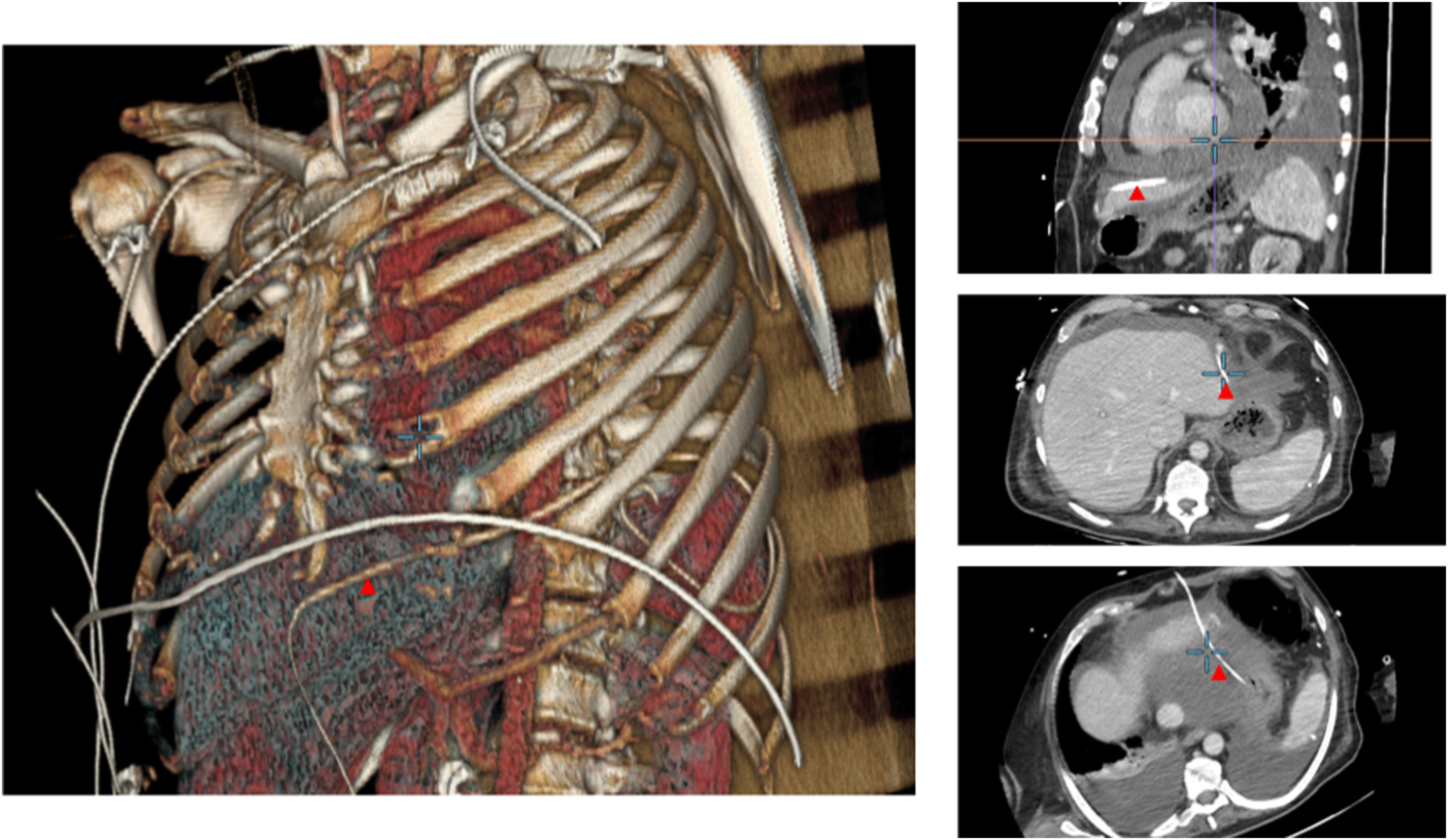
A 58-year-old male suffering from myelodysplastic syndrome who had undergone allo-HSCT was admitted to the ICU due to obstructive shock secondary to pericardial effusion within the setting of capillary leak syndrome. Ultrasound guidance was used to perform pericardiocentesis, which resulted in serous fluid extraction that was consistent with the clinical context. Subsequently, a drain was placed. Following the extraction of 500 ml of serous fluid, the patient exhibited no improvement of shock, and the effusion remained unchanged as evidenced by echocardiography. The location of the drain was examined by CT (Fig. 1), which confirmed malpositioning of the catheter in the peritoneal cavity. Consequently, the drained liquid corresponded to ascitic fluid within the context of capillary leakage. The patient required surgery to remove the malpositioned catheter and create a pericardial window, which successfully resolved the shock. This case underscores the complexity of the technique and the potential complications, even with ultrasound guidance.
Financial supportThe authors declare that they have received no funding for this study.
To the Departments of Intensive Care Medicine and Cardiology at H.U. de la Princesa for their collaboration.