
Tracheostomy decannulation is a critical step in patient recovery, yet practices remain heterogeneous worldwide. We aimed to develop a comprehensive, consensus-based model of the tracheostomy decannulation process tailored to Latin American healthcare systems.
DesignThree-round Delphi consensus using the Process-Oriented Delphi Method.
SettingMultinational, multicenter study across Chile, Argentina, Mexico, and Ecuador.
ParticipantsSeventy-five healthcare professionals with expertise in tracheostomy care, including physicians, nurses, speech therapists, respiratory therapists, and physiotherapists. Fifty-five experts completed all rounds.
InterventionsAn initial process model was constructed from a structured review of the literature and institutional protocols. Through iterative Delphi rounds, experts reviewed, refined, and reached consensus on activities, decision nodes, and professional responsibilities within the decannulation pathway. Activities were modeled using Business Process Model and Notation.
Main variables of interestConsensus on inclusion of activities (≥80% agreement threshold), professional role assignment, and decision criteria for decannulation readiness. Predefined stopping rules were applied when response stability was achieved.
ResultsThe final consensus model comprised 15 main activities organized into seven subprocesses. Each activity was assigned to specific professional roles, with conditional decision nodes integrated to account for clinical variability. No consensus was reached on precise physiological thresholds (e.g., cough peak flow). Procedures such as bronchoscopy were incorporated conditionally depending on patient context.
ConclusionsAn interprofessional Latin American panel successfully developed a standardized tracheostomy decannulation process. This consensus-based model provides a clear, adaptable framework to guide clinical practice, improve role clarity, and inform future research.
Las prácticas de decanulación de traqueostomía son heterogéneas a nivel mundial. Nuestro objetivo fue desarrollar un modelo consensuado del proceso de decanulación adaptado a los sistemas de salud latinoamericanos.
DiseñoConsenso Delphi de tres rondas.
ÁmbitoEstudio multinacional y multicéntrico en Chile, Argentina, México y Ecuador.
ParticipantesSetenta y cinco profesionales de la salud con experiencia en cuidados de traqueostomía, incluyendo médicos, enfermeras, fonoaudiólogos, terapeutas respiratorios y kinesiólogos. Cincuenta y cinco expertos completaron todas las rondas.
IntervencionesSe construyó un modelo inicial a partir de una revisión estructurada de la literatura y protocolos institucionales. Mediante rondas Delphi iterativas, los expertos revisaron, refinaron y alcanzaron consenso sobre actividades, nodos de decisión y responsabilidades profesionales durante la decanulación.
Variables de interés principalesConsenso sobre inclusión de actividades (umbral ≥80% de acuerdo), asignación de roles profesionales y criterios de decisión para la preparación a la decanulación. Se aplicaron reglas de detención predefinidas cuando se alcanzó estabilidad en las respuestas.
ResultadosEl modelo final consensuado comprendió 15 actividades principales organizadas en siete subprocesos. Cada actividad fue asignada a roles profesionales específicos, con nodos de decisión condicionales para abordar la variabilidad clínica. No se alcanzó consenso sobre umbrales fisiológicos precisos (p. ej., flujo pico de tos). Procedimientos como la broncoscopía se incorporaron de manera condicional según el contexto clínico.
ConclusionesUn panel interprofesional latinoamericano desarrolló exitosamente un modelo de decanulación de traqueostomía. Este ofrece un marco claro y adaptable para guiar la práctica clínica e impulsar futuras investigaciones.
Approximately 15–30% of mechanically ventilated critically ill patients with prolonged mechanical ventilation require tracheostomy to effectively wean from invasive respiratory support.1–3 In this context, tracheostomy has been described as a hallmark of chronic critical illness, a prevalent syndrome that affects patients across multiple dimensions and is associated with considerable burden of morbidity and mortality.4–6 This vulnerable population typically requires extended stays in intensive care units (ICUs) and hospitals, along with prolonged rehabilitation efforts, leading to a substantial concentration of healthcare expenditure.7–9
Current evidence and expert consensus have standardized key aspects in the tracheostomy decision-making process, including indications, timing, and procedural aspects.10 Conversely, there is still wide heterogeneity within the international practice of tracheostomy decannulation.11–13 This inconsistency becomes clinically relevant as evidence-based protocols have the potential to shorten tracheostomy duration, improve patient rehabilitation, and decrease dependency on high-acuity care, ultimately reducing hospital length of stay.14
Clinical processes are often represented with flowcharts, yet such diagrams inadequately represent complex multidisciplinary interactions involving non-binary decisions or varying abstraction levels.15 Process mining is an emerging discipline in healthcare that allows analysis of real-world clinical workflows based on event logs.16–18 It effectively captures the dynamic behavior of healthcare processes, including activities, participants, decision points, and their execution patterns. However, in many clinical contexts, such as those lacking standardized electronic records or in emerging healthcare systems, empirical data may be unavailable or incomplete. In such cases, process modelling offers a complementary approach, allowing experts to explicitly define idealized workflows based on collective knowledge and best practices. One of the most widely used standards for process modelling is Business Process Model and Notation (BPMN), which facilitates communication between stakeholders through a standardized graphical representation of workflows.19–24
In this context a recent work by Gonzalez-Lopez et al. introduced the Process-Oriented Delphi Method (ProDeM),25 a method enabling experts from diverse countries to collaboratively reach consensus on a process model of a clinical process. Through this anonymous, asynchronous, and iterative Delphi methodology, experts agree on the required sequence of activities, responsible roles, and decision-making rules. All are represented through a standard that assigns a univocal notation to each component of the process. ProDeM addresses several limitations identified in previous Delphi studies20,21 to define clinical processes, such as the lack of a uniform definition of consensus and the criteria for experts’ selection.
This study aimed to develop a comprehensive, standardized tracheostomy decannulation process model, incorporating interdisciplinary expertise through a structured literature review and an international Delphi-based consensus using the ProDeM approach.
MethodsProcess-oriented Delphi methodAfter receiving approval from the institutional review board (Approval number 220721004, Comité de Ética en Investigación, Facultad de Medicina, Pontificia Universidad Católica de Chile), we applied the Process-Oriented Delphi Method (ProDeM25 to reach consensus and create a final tracheostomy decannulation process model reflecting best clinical practices across different countries and scenarios. Detailed methodological aspects are described in the original ProDeM publication. ProDeM included the following key stages.25
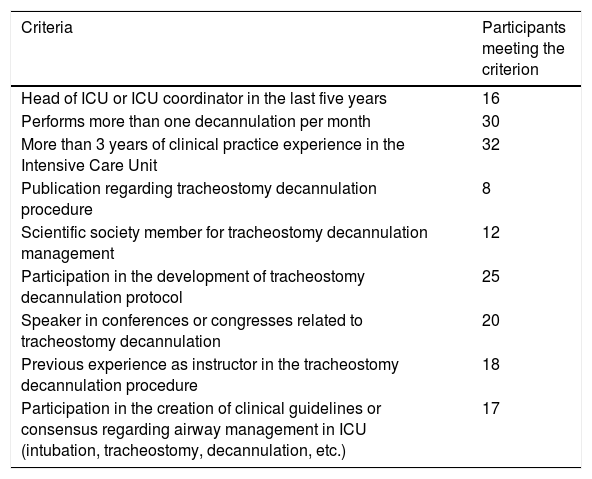
Expert panel compositionWe assembled a multidisciplinary panel of physicians, nurses, physical therapists, respiratory therapists, and speech therapists who met at least two criteria listed in Table 1. Experts were identified through peer-reviewed publications and the Latin American Intensive Care Network (LIVEN) registry and were invited via email with details on the study’s objectives and process.
Criteria for expertise met by participants.
| Criteria | Participants meeting the criterion |
|---|---|
| Head of ICU or ICU coordinator in the last five years | 16 |
| Performs more than one decannulation per month | 30 |
| More than 3 years of clinical practice experience in the Intensive Care Unit | 32 |
| Publication regarding tracheostomy decannulation procedure | 8 |
| Scientific society member for tracheostomy decannulation management | 12 |
| Participation in the development of tracheostomy decannulation protocol | 25 |
| Speaker in conferences or congresses related to tracheostomy decannulation | 20 |
| Previous experience as instructor in the tracheostomy decannulation procedure | 18 |
| Participation in the creation of clinical guidelines or consensus regarding airway management in ICU (intubation, tracheostomy, decannulation, etc.) | 17 |
A structured review was conducted using MEDLINE, SciELO, and Google Scholar, with search terms in English and Spanish related to tracheostomy decannulation. Additionally, local protocols from Latin American hospitals were collected. From each source, we extracted decannulation activities, participant roles, and decision points across different stages.
Initial tracheostomy decannulation process modelBased on identified activities from a structured literature review and local protocols (which is further described in Supplementary text 1), the research team, which included two respiratory therapists, one information technology analyst, one anesthesiologist, and one intensivist (RB, YJ, JG, RDLF, EK) elaborated an initial tracheostomy decannulation process model using Business Process Model and Notation (BPMN). BPMN is a de facto standard for process modeling19 with elements representing control flow, data and resource dimensions of processes. It offers the ability to visualize internal organizational procedures through standardized graphical notation, facilitating communication between stakeholders. The control-flow perspective of processes is represented through activities, events, and gateways, arranged in defined sequences and conditions to pass from one element to another and define parallel and alternative behaviors. The use of subprocesses to move details in a complex process to a separate process model helps maintain simplicity and improve diagram readability for clinical users.26
Questionnaire developmentExperts who agreed to participate received an online survey including demographic questions and the initial BPMN-based model. The questionnaire was piloted by non-experts to ensure clarity. Experts rated each activity on a 5-point Likert scale (1 = should never be included to 5 = must be included) and could propose new actions or modifications. Roles were assigned according to local practice. A 75% agreement threshold was applied as an operational criterion during intermediate rounds to determine whether elements should be retained, modified, or removed from the evolving model. This approach ensured flexibility and inclusivity in early stages while capturing diverse expert opinions. Heuristic methods were applied otherwise. Decisional pathways (e.g., to skip, repeat, or parallelize activities) were explicitly evaluated. Open-ended questions allowed qualitative feedback.
In subsequent rounds, experts reviewed updated versions of the model with aggregated prior responses. New activities or changes were incorporated iteratively. Communication with the research team was available throughout to address questions or clarify tasks.
Consensus threshold and stopping criteriaThe ProDeM methodology follows quality criteria proposed by for Delphi studies,27 defining both consensus thresholds and stopping criteria. For the final model, a stricter threshold was applied: activities achieving at least 80% agreement were included definitively (≥4 points average in survey answers), combined with stability measures (≥85% correlation between successive rounds). This two-tiered approach balances inclusivity during iterative refinement with robustness in the final consensus, following best practices for Delphi studies in complex contexts. Two pre-defined stopping criteria were included: a correlation higher than 85% in successive rounds in the average score of the numerical value for each activity, or a maximum of three rounds if the first criterion was not met.
Statistical analysisData are presented as a means plus absolute percentage variability, median [interquartile range], or percentage (%). Data were analyzed with GraphPad Prism v10 (GraphPad Software, San Diego, California, USA). A two-tailed p-value of 0.05 was considered statistically significant.
ResultsFrom November 2023 to March 2024, experts were invited to participate in the Delphi consensus, and responses for the panel rounds were collected. Out of the 163 invited experts from Chile, Argentina, Mexico and Ecuador. Seventy-five experts agreed to participate and completed the first round. Sixty participants completed the second round and fifty- five completed the third and final round (73% of the initial cohort).
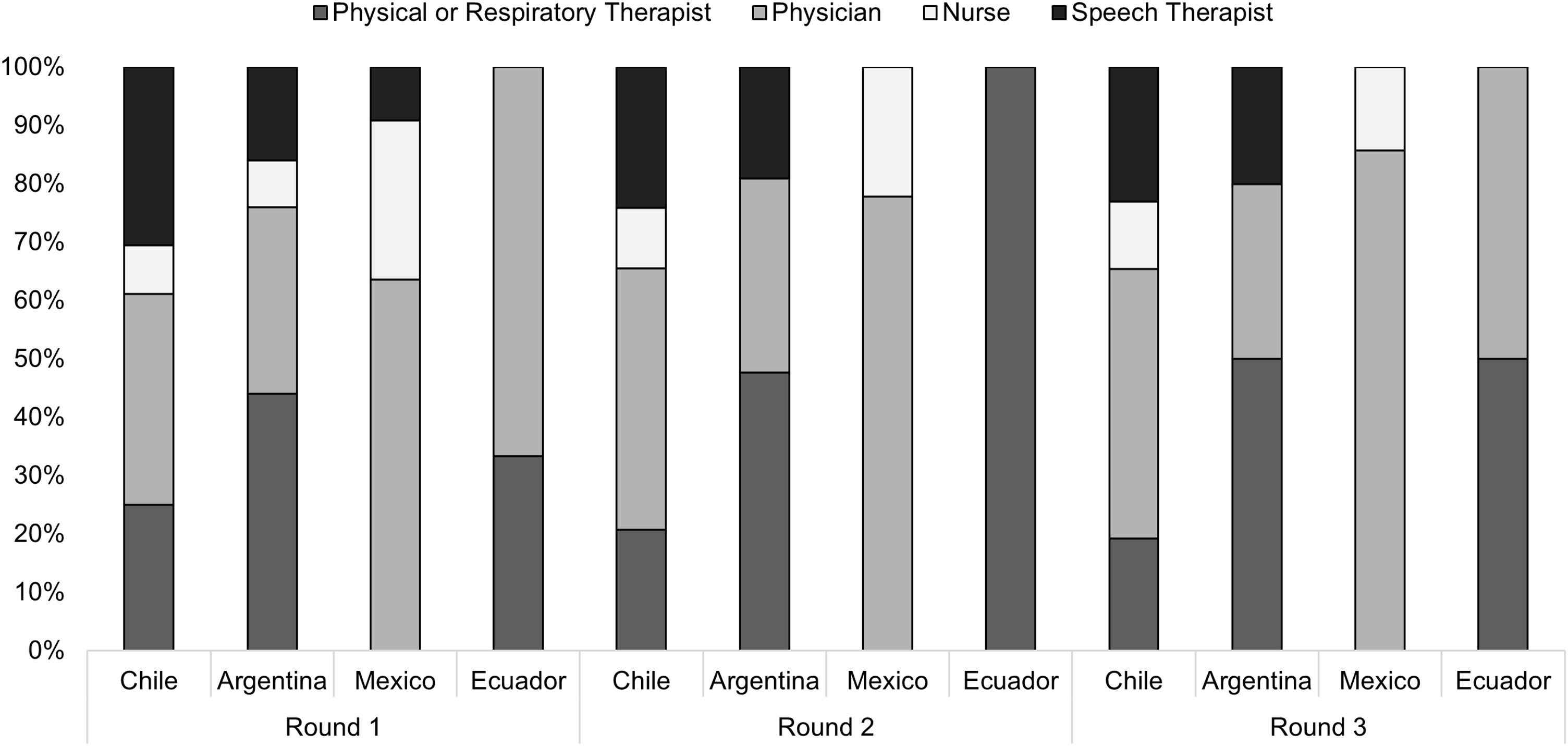
The mean age of participants was 40 ± 9 years, and 43 of them (57%) were men. Of the final Delphi panel (55 participants), 25 were physicians, 16 were physical therapists or respiratory therapists, 10 speech therapists and 4 nurses. 41% were affiliated with public hospitals, 38% to private entities, 16% to university hospitals, and 5% to military healthcare centers. Fig. 1 summarises the distribution of experts by primary training specialty and country of origin across all three Delphi rounds. Fifty-three percent of the participants met more than five of the proposed criteria for being considered expert (Supplementary Fig S1). The stepwise consensus for each activity is detailed in Supplementary Tables S1–S9.
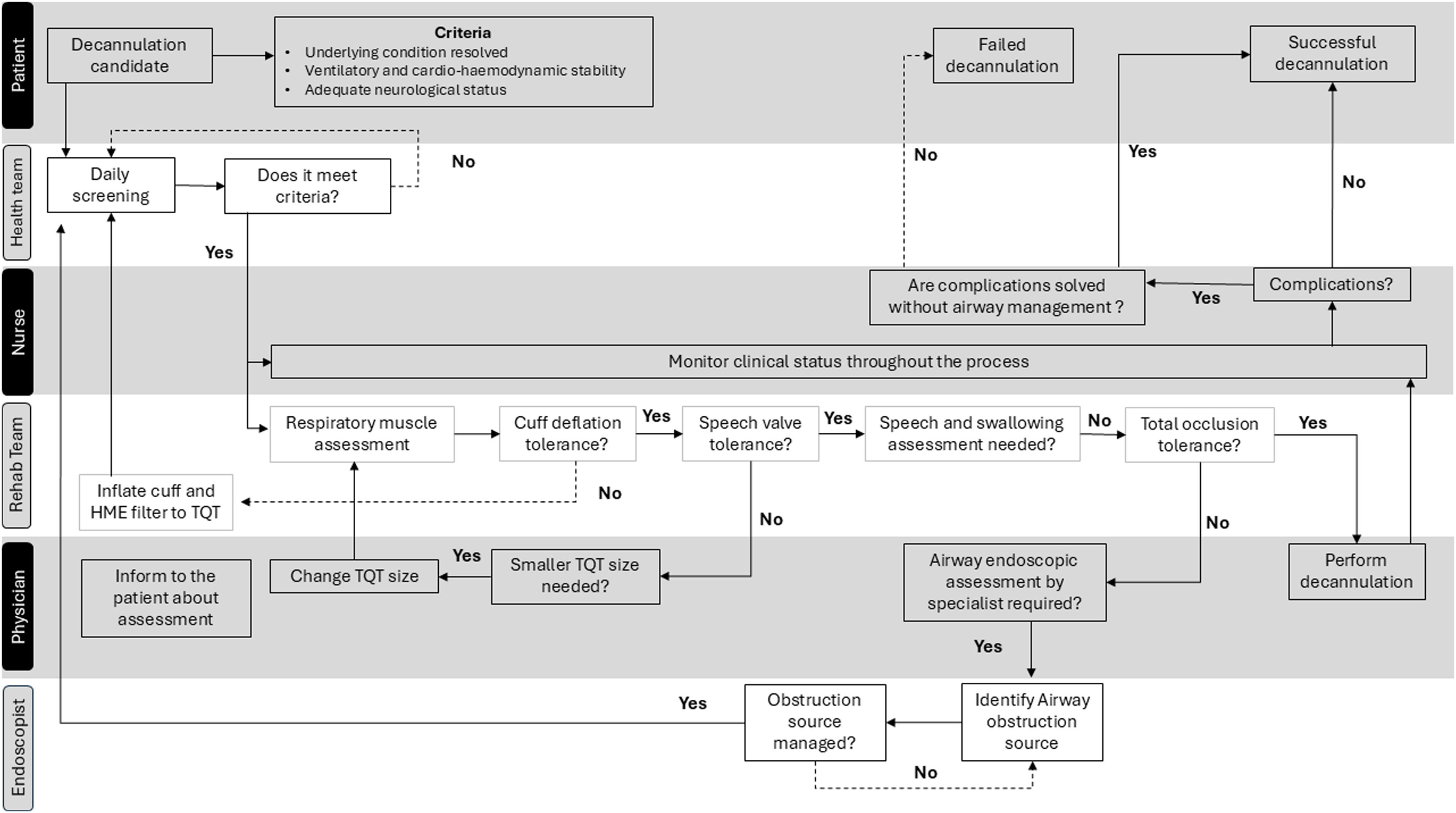
After three rounds, a high-level Tracheostomy Decannulation process model was structured (Fig. 2), consisting of 15 tasks, of which 3 are sub-processes that can be independently unbundled: Assessment of respiratory muscle function, Assessment of speech and swallowing, Perform Decannulation. The sub-process of assessment of respiratory function included three sub-processes (Supplementary Fig. S3): Assessment of expiratory musculature (Supplementary Fig. S4), Assessment of inspiratory musculature (Supplementary Fig. S5), Assessment of coughing ability (Supplementary Fig S6). Initially, the sub-process Speech and Swallowing' (Supplementary Fig. S7) was included as mandatory but became conditional in the final consensus model, including in its layout a swallowing assessment sub-process of its own (Supplementary Fig. S8). Finally, the sub-process Perform Decannulation is diagrammed in extenso (Supplementary Fig. S9). The expert panel identified certain steps that fell under the specific responsibilities of individual healthcare professionals, while others required the collaborative involvement of the entire team.
Simplified version of final process model of tracheostomy decannulation in BPMN notation.
The black frame presents standard business process model and notation (BPMN) decisional pathways and activities. MAP: mean arterial pressure; S5Q: Standardized five questions; HME: heat-moisture exchange; PAP: positive airway pressure.
In a general approach, across all subprocesses, the Delphi panel achieved strong agreement on core activities, while ancillary steps showed greater variability. In other words, consensus was not uniformly distributed across all subprocesses. As detailed in Supplementary Tables S1–S9, the highest consensus (≥80%) was observed in activities related to respiratory muscle assessments (Tables S5 and S6), cough evaluation (Table S7), and the decannulation procedure (Table S9). These steps represent universally accepted practices and form the backbone of the final model.
Conversely, activities such as extended swallowing protocols and the Modified Blue Dye Test (Table S4) did not reach the predefined threshold, reflecting ongoing debate and heterogeneity in their routine use. Similarly, some conditional interventions that were suggested during Delphi rounds (e.g., tracheal button consideration, advanced endoscopic evaluations) remained below consensus, indicating their context-dependent nature, reflecting the variable clinical adoption and ongoing debate surrounding these assessments, rather than methodological inconsistency.
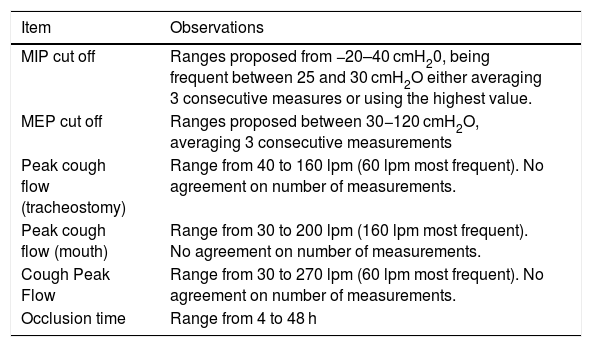
The consensus process model begins with a daily assessment for decannulation readiness, as shown in Fig. 2 (simplified version) and Figure S2 (full BPMN version), for a detailed flowchart and consensus on each subprocess, see the Supplementary Figures and Tables. Once baseline criteria are met, the patient progresses through a series of stepwise evaluations. These include assessments of respiratory muscle function, cuff deflation tolerance, and the use of a speaking valve. Nevertheless, no consensus was reached regarding a specific cutoff value for any of these variables (Table 2). If the speaking valve is not tolerated, conditional and alternative pathways are proposed according to the specific context (i.e., tracheostomy downsizing vs endoscopic assessment).
Areas where no consensus was met.
| Item | Observations |
|---|---|
| MIP cut off | Ranges proposed from −20–40 cmH20, being frequent between 25 and 30 cmH2O either averaging 3 consecutive measures or using the highest value. |
| MEP cut off | Ranges proposed between 30−120 cmH2O, averaging 3 consecutive measurements |
| Peak cough flow (tracheostomy) | Range from 40 to 160 lpm (60 lpm most frequent). No agreement on number of measurements. |
| Peak cough flow (mouth) | Range from 30 to 200 lpm (160 lpm most frequent). No agreement on number of measurements. |
| Cough Peak Flow | Range from 30 to 270 lpm (60 lpm most frequent). No agreement on number of measurements. |
| Occlusion time | Range from 4 to 48 h |
Abbreviations: MIP, maximal inspiratory pressure; MEP, Maximal expiratory pressure.
The patient then undergoes complete airway occlusion for a period of 12 to 48 h. If the planned tracheostomy occlusion time is not tolerated, a thorough assessment including endoscopic evaluation should be considered to determine the cause of obstruction and guide appropriate clinical management. If occlusion is completed without complications, decannulation is performed, followed by a close observation period of 24 to 48 h to ensure the patient's stability. Throughout the entire process, the patient is carefully monitored for complications such as desaturation, stridor, respiratory distress, or hemodynamic instability. Whenever there is a failed assessment, gates to restart the tracheostomy decannulation process are present throughout the whole algorithm.
DiscussionThe main findings of this study can be summarized as follows: an interprofessional Latin-American expert panel successfully developed a step-by-step consensus on the tracheostomy decannulation process using ProDeM methodology. The final process model integrates a holistic perspective including relevant activities, specific roles of different healthcare professionals, and rules to guide key decisional points.
Reliance on local guidelines, added to the paucity of evidence-based literature, has determined a wide variability of practice throughout Latin America and the world on tracheostomy decannulation. When contrasting these protocols with the final consensus process model, the latter brings a leaner approach to tracheostomy decannulation. For example, elements commonly found in local guidelines, such as suctioning, mandatory deglutition and bronchoscopy assessment,28–30 were not included in the final consensus model, and only performed conditionally based on clinical necessity. This consensus-based model has the potential to streamline tracheostomy decannulation practices, reducing unnecessary variability and promoting more efficient use of healthcare resources.
One of the strengths of the study was the structured interprofessional approach that was followed. Even though ancillary assessments and decisions for tracheostomy decannulation were performed by a diverse set of specialists or healthcare workers in different countries and clinical settings, the activities were a common ground.31 One example was bronchoscopy assessment, which could be delivered by ICU physicians, otorhinolaryngologists, pneumologists, or anesthesiologists. However, the endpoints and decisional aspects were the same. Thus, the conflating specialists from diverse backgrounds into common activities, enhanced the external applicability of the model. Unlike previous publications with ambiguous algorithms and recommendations,32 this study allowed us to develop one of the most complete pathways to guide clinicians along the whole process of tracheostomy decannulation, merging the best available evidence and interprofessional expertise. Recently, the REDECAP trial on tracheostomy capping and decannulation was published, concluding that connecting patients to high-flow nasal oxygen (HFNO) in parallel to suctioning thresholds could provide a better strategy to facilitate tracheostomy decannulation.33 Moreover, in this study, we did not include this alternative due to the contextual situation. In Latin America, the availability of HFNO for tracheostomized patients, both inside and outside the ICU, is limited, as there is no surplus of such devices. These are primarily allocated to the initial management of acute respiratory failure or used as post-extubation support. Furthermore, the type of tracheostomy cannulas commonly available (single-lumen) does not allow for the implementation of the REDECAP trial strategy, which required multi-fenestrated cannulas. Therefore, we relied on the traditional capping approach to conduct decannulation. Despite reaching consensus on most core activities, some variability persisted in specific aspects of the decannulation process.34–36 For example, the capping duration before tracheostomy removal varied from 4 h to 48 h (Table 2). Another aspect that the Delphi panel could not provide consensus was on the cut-offs to define thresholds on inspiratory and expiratory muscle adequacy to tolerate decannulation. These areas provide fertile ground for high-quality research in this topic, to integrate evidence-based answers into the care of tracheostomized patients. The heterogeneity observed emphasizes the need for continuous updates to the consensus model as new evidence and clinical practices evolve.
Secretion management is widely recognized as a determinant of decannulation success; however, our model emphasizes cough competence rather than suction frequency, given the challenges of monitoring aspiration rates outside controlled trials. The ability to protect the airway and clear secretions effectively was addressed through the cough evaluation subprocess (Supplementary Figure S6), which provides a functional assessment of airway clearance. This test is performed with the cuff occluded, simulating a post-decannulation scenario more accurately than using fenestrated cannulas. While suctioning remains a critical safety measure, cuff occlusion complements this practice by approximating real-world conditions and enabling clinicians to evaluate airway protection under physiologic circumstances. Our approach does not seek to establish universal recommendations but to reflect practices and expert experience within our regional context, ensuring feasibility and patient safety in resource-constrained environments.
Reaching consensus through Delphi methodology in complex clinical processes presents inherent challenges, particularly regarding the definition of consensus thresholds and stopping criteria. In line with published methodological guidance for Delphi studies in health sciences, we predefined explicit consensus rules and stability criteria to enhance transparency and reproducibility. The ProDeM approach was particularly suitable for this study, as it supports structured consensus on complex, interprofessional workflows by integrating activities, roles, and decision points into a formal process model. This methodology allowed us to standardize key elements of tracheostomy decannulation while preserving contextual flexibility, which is essential given the heterogeneity of clinical settings and resource availability across Latin America.
This study presents several limitations that should be acknowledged. First, there was an initial decay from the first to the third Delphi round, in which 27% of the participants who agreed to respond did not proceed further. However, we expected such a dropout considering the length of the survey and maintained a minimum number of participants from each discipline throughout the three rounds. Second, the Delphi panel focused on Latin American experts, so external validity to other clinical scenarios should be interpreted with caution, specially, when commonly used interventions in other contexts are not present in our regional reality. Thus, this consensus can’t be applied directly to all clinical scenarios worldwide. However, parallelisms can be drawn to other contexts of critical care, in which geographical variability exists within South America, compared to Europe and North America. These differences have been associated with organizational and structural factors, rather than lack of knowledge of recent literature.37 The study focused on the standard approach to patients, without stratifying on previous decannulation difficulty, as it is usually done in IMV weaning protocols. The BPMN diagram only focuses on a standardised decannulation process where variants of more complex clinical cases are not considered; thus, addressing more infrequent complications is excluded from the model. This decision improves clinicians' understanding by not over-complexing and diagramming the less likely pathways. Finally, although newer variants of the Delphi consensus approach have emerged recently, such as real-time Delphi, no evidence of the superiority of a specific methodology in this context has been established. Future research endeavors should assess the applicability of this consensus process model, its impact on patient-centered outcomes, and address current knowledge gaps regarding how to improve the safety and efficiency of care for tracheostomized patients.
ConclusionAn interprofessional panel of Latin American healthcare providers successfully developed a step-by-step process model for tracheostomy decannulation using the ProDeM methodology. This process model provides a structured framework to ensure safe and effective decannulation practices. Further studies are needed to assess the model's applicability in different contexts and to fill the knowledge gaps that emerged from this study.
CRediT authorship contribution statementRB, YJ, JG, RdlF and EK conceived the study. JG ran de Delphi rounds. RB, YJ, JG, EK did the analysis. RB, YJ, JG, RdlF, MIE, LGD, GP, NM, JMG, MS, and EK interpreted the data. RB, YJ and EK drafted the initial manuscript, and all authors commented on previous versions of the manuscript. All authors read and approved the final manuscript.
Declaration of Generative AI and AI-assisted technologies in the writing processNo artificial intelligence tools were used in this manuscript.
FundingANID FONDECYT Iniciación N° 11261441 (RB); ANID-PFCHA/Doctorado Nacional/2020-21201411 (RDLF).
Data sharing statementDeidentified participant data can be shared upon reasonable request to the corresponding author.
Authors declare no conflict of interests
We gratefully acknowledge all the experts who contributed to this Delphi process by completing the surveys and providing thoughtful feedback. Their insights and dedication were essential to the development of the consensus presented in this work on tracheostomy decannulation.
The following are Supplementary data to this article: