
Different studies have determined blood linezolid concentrations. However, the largest studies reporting data on factors associated with subtherapeutic linezolid concentrations in critically ill patients account for less than 60 patients. Thus, the objective of our study was to determine what factors were associated with subtherapeutic linezolid concentrations in critically ill patients in a larger series of patients.
DesignHistorical cohort study.
SettingOne Spanish Intensive Care Unit.
PatientsCritically ill adult patients who received linezolid due to suspected or confirmed infection by multidrug-drug-resistant Gram-positive bacteria during 2022 and 2023.
InterventionsBlood samples were collected to determine linezolid concentrations (Cmin) immediately before dosing after at least 48 h from starting linezolid therapy.
Main variable of interestSubtherapeutic linezolid concentrations.
ResultsWe included a total of 168 patients. We found 79 (47.0%) patients with and 89 (53.0%) patients without subtherapeutic linezolid concentrations. Multiple logistic regression showed that linezolid continuous infusion (OR = 0.192; 95% CI = 0.053–0.694; P = .01) and older age (OR = 0.952; 95% CI = 0.926–0.980; P = .001) were associated with lower risk of subtherapeutic linezolid concentrations.
ConclusionsAs far as we know, this is the largest study reporting data on factors associated with subtherapeutic linezolid concentrations in critically ill patients. To our knowledge, our study is the first to report that linezolid continuous infusion was independently associated with lower risk of subtherapeutic linezolid concentrations in critically ill patients.
En varios estudios se han determinado los niveles sanguíneos de linezolid. Sin embargo, los estudios de mayor tamaño muestral que reportaron datos sobre los factores asociados con concentraciones subterapéuticas de linezolid en pacientes críticos incluyeron menos de 60 pacientes. Por lo tanto, el objetivo de este estudio consiste en determinar que factores se asocian con concentraciones subterapéuticas en pacientes críticos en una serie de mayor tamaño muestral.
DiseñoEstudio de cohortes histórico.
ÁmbitoUna Unidad de Cuidados Intensivos española.
PacientesPacientes críticos adultos que recibieron tratamiento con linezolid por la sospecha o confirmación de infección por bacterias grampositivas multirresistentes durante 2022 y 2023.
IntervencionesSe tomaron muestras sanguíneas para determinar los niveles valle de linezolid después de 48 horas de haber iniciado el tratamiento con linezolid e inmediatamente antes de la siguiente dosis.
Variable de interés principalConcentración subterapéutica de linezolid.
ResultadosSe incluyeron un total de 168 pacientes, 79 (47.0%) con y 89 (53.0%) sin concentración subterapéutica de linezolid. El análisis de regresión logistica mostró que la administración de linezolid en infusión continua (OR = 0.192; 95% CI = 0.053–0.694; P = .01) y mayor edad (OR = 0.952; 95% CI = 0.926–0.980; P = .001) se asociaron con un menor riesgo de concentración subterapéutica.
ConclusionesQue nosotros sepamos, este es el estudio de mayor tamaño muestral reportando datos sobre los factores que se asocian con concentraciones subterapéuticas de linezolid en pacientes críticos. Que nosotros sepamos, este es el primer estudio que reporta que la administración de linezolid en infusión continua reduce el riesgo de concentración subterapéutica en pacientes críticos.
Linezolid is an antibiotic agent used for the treatment of infections produced by Gram-positive bacteria and has activity against multidrug-drug-resistant (MDR) pathogens as methicillin-resistant Staphylococcus aureus (MRSA) and vancomycin-resistant enterococci (VRE). It has been proposed that maintenance of linezolid trough concentrations (Cmin) within a pre-defined range (habitually 2−7 mg/L) may be helpful in preventing drug-related adverse events and preserving therapeutic effectiveness.1–3
Different studies have determined blood linezolid concentrations4–39; however, most of those studies had less than 70 blood linezolid samples. In addition, the factors associated with subtherapeutic concentrations of linezolid in critically ill patients were not reported in the larger studies.22,23 In the study by Cattaneo et al. with 3250 samples22 and in the study by Pea et al. with 2484 samples23 were included patients of all hospital wards but were not reported data specifically in critically ill patients.
Different studies have determined blood linezolid concentrations24–39 in critically ill patients; however, the factors associated with subtherapeutic concentrations of linezolid in critically ill patients were not reported in the larger studies.24–26 In the studies by Xu et al. with 330 patients,24 by Wang et al. with 152 patients25 and by Dong et al. with 70 patients26 were reporting data of blood linezolid concentrations on critically ill patients; however, there were not reported that factors were associated with subtherapeutic linezolid concentrations. The study by Taubert et al. with 52 critically ill patients is the highest study reporting data about the factors associated with subtherapeutic linezolid concentrations in critically ill patients.27 Thus, the objective of our study was to determine what factors were associated with subtherapeutic linezolid concentrations in critically ill patients in a larger series of patients.
Material and methodsDesign and subjectsIn this retrosprospective study were included patients who received linezolid due to suspected or confirmed infection by MDR Gram-positive bacteria admitted to a polyvalent Intensive Care Unit during 2022 and 2023. The study was approved by the Ethics Committee of Hospital Universitario de Canarias (La Laguna. Tenerife. Spain) (LNZ_pol_2023), which waived the requirement for informed consent due to the retrospective nature of the study and the anonymized handling of the data. At all times, we complied with the law regarding patient confidentiality and data protection. Criteria exclusion was the need to renal replacement therapy.
Determination of blood linezolid concentrationsBlood samples to determine blood linezolid concentrations were collected immediately before dosing after at least 48 h from starting linezolid therapy. Linezolid plasma concentrations were analysed by enzymatic immunoassay as previously described.8,9 Precision and accuracy were assessed by performing replicate analysis of quality control samples against calibration standards. Intra- and interassay coefficients of variation were always <10%. The lower limit of detection was 0.2 mg/L. Distributions of linezolid Cmin were defined as follows: subtherapeutic < 2 mg/L, therapeutic between 2−7 mg/L, and supratherapeutic > 7 mg/L.
Variables recordedThe following data were retrieved from the patient data sheets stored at our institution: age, gender, weight, height, body mass index (BMI), serum creatinine, aPTT, procalcitonin, hemoglobin, platelets, glutamate oxaloacetate transaminase (GOT), glutamate pyruvate transaminase (GPT), proteins, albumin, Acute Physiology and Chronic Health Evaluation (APACHE-II),40 linezolid dose at day, type of linezolid infusion (continuous or intermittent), Chronic Obstructive Pulmonary Disease (COPD), diabetes mellitus, ischemic heart disease, bilirubin, leukocytes, pressure of arterial oxygen/fraction inspired oxygen (PaO2/FIO2), C reactive protein (CRP), glucose, body mass index, international normalized ratio (INR), type of admission on ICU, infection focus, septic shock and linezolid Cmin. Creatinine clearance (CrCL) was estimated by means of the Cockcroft and Gault formula.41
Statistical methodsAll statistical analyses were performed with SPSS 17.0 (SPSS Inc., Chicago, IL, USA). Categorical variables are presented as frequencies and percentages, and chi-square test was used for comparison between subject groups. Continuous variables are presented as medians and percentile 25−75, and Mann–Whitney U test was used to compare the subject groups. To determine the association between continuous variables was used Spearman's rho correlation coefficient. Differences with a P value <.05 were considered statistically significant.
Multivariate logistic regression analysis was carried out to determine that variables were associated with subtherapeutic linezolid concentrations. Variables with a P-value ≤.10 in the comparison between subjects with and without subtherapeutic linezolid concentrations were included in the regression analysis. We found that 11 variables showed a P-value ≤.10 in the comparison between subjects with and without subtherapeutic linezolid concentrations (sex, age, CrCl, creatinine, procalcitonin, GPT, GOT, proteins, hemoglobin, platelets and aPTT). However, creatinine was not included in the regression analysis because it is part of CrCl; thus, we included 10 of those variables in the regression analysis. In addition, there were 2 clinical variables with a P-value >.10 in the comparison between subjects with and without subtherapeutic linezolid concentrations that could influence on subtherapeutic linezolid concentrations and were also included in the regression analysis (linezolid dose at day and linezolid continuous infusion). As the number of patients with subtherapeutic linezolid concentrations was 79, we constructed several regression analyses to avoid an overfitting effect in a single regression model.42 First, we constructed a multiple logistic regression model with those 2 clinical variables of interest analysis (linezolid dose at day and linezolid continuous infusion) and 5 of the variables with a P-value ≤.10 in the comparison between subjects with and without subtherapeutic linezolid concentrations (GPT, GOT, aPTT, age and hemoglobin). Second, we constructed a multiple logistic regression model with those 2 clinical variables of interest analysis (linezolid dose at day and linezolid continuous infusion) and the other 5 variables with a P-value ≤.10 in the comparison between subjects with and without subtherapeutic linezolid concentrations (sex, CrCl, proteins, procalcitonin, and platelets). Third, we constructed a multiple logistic regression model with those variables that showed P-value ≤.10 in some of the two previous regression models (linezolid dose at day, linezolid continuous infusion, aPTT, age and CrCl). Odds ratio was provided for each variable.
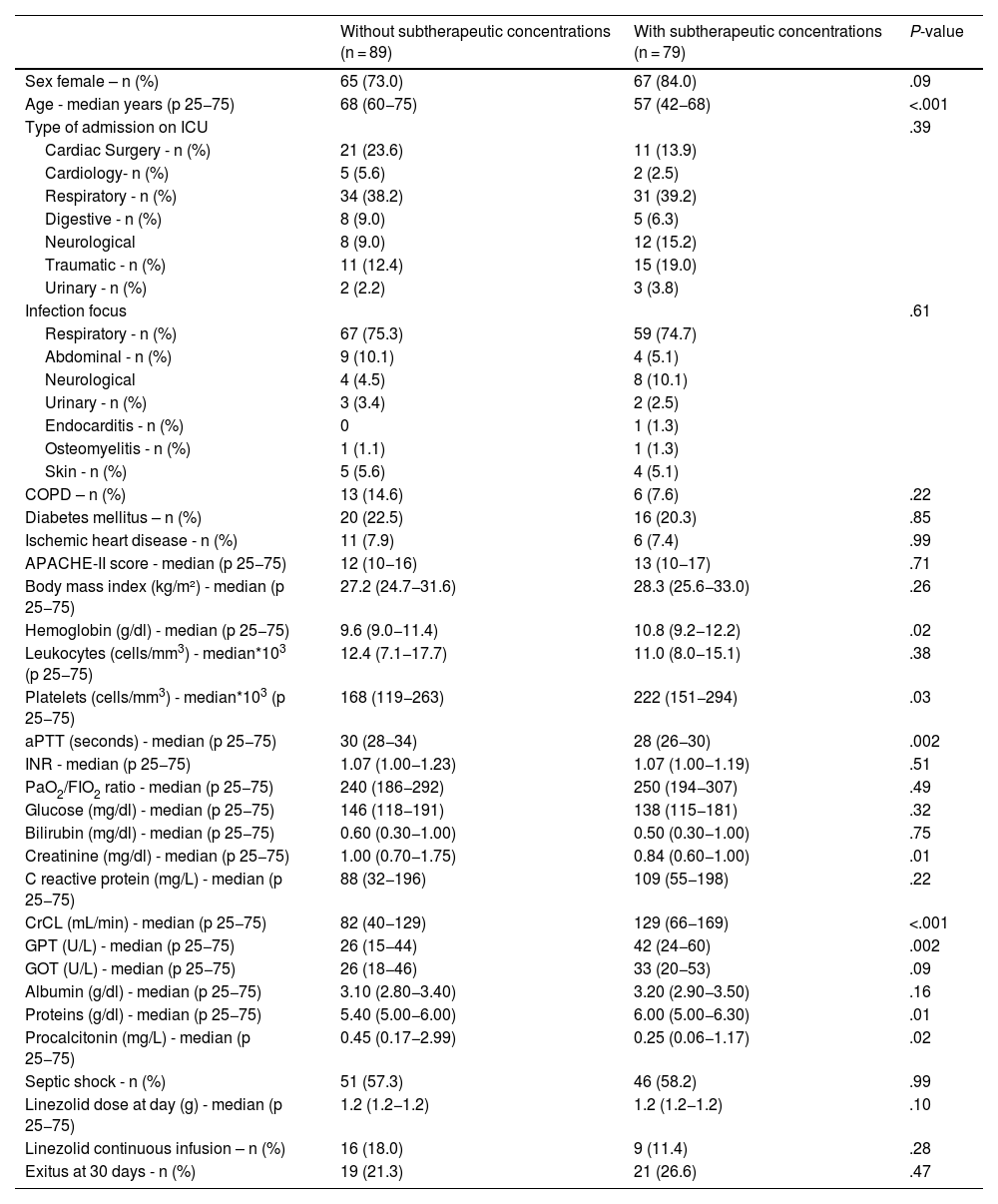
ResultsWe included a total of 168 patients. We found 79 (47.0%) patients with and 89 (53.0%) patients without subtherapeutic linezolid concentrations. We found that patients with subtherapeutic linezolid concentrations in respect to without showed lower age (P < .001), aPTT (P = .002), creatinine (P = .01) and procalcitonin (P = .02); and higher hemoglobin (P = .02), platelets (P = .03), Cr Cl (P < .001), GPT (P = .002) and proteins (P = .01) (Table 1). However, we did not find significant differences between patients with and without subtherapeutic linezolid concentrations in sex, APACHE-II, linezolid dose at day, type of linezolid infusion (continuous or intermittent), COPD, diabetes mellitus, ischemic heart disease, bilirubin, leukocytes, PaO2/FIO2, C reactive protein, GOT, albumin, glucose, body mass index, INR, type of admission on ICU, infection focus and septic shock. We found a negative association between CrCl and age (rho = −0.425; P < .001).
Comparisons between patients with and without subtherapeutic linezolid concentrations.
| Without subtherapeutic concentrations (n = 89) | With subtherapeutic concentrations (n = 79) | P-value | |
|---|---|---|---|
| Sex female – n (%) | 65 (73.0) | 67 (84.0) | .09 |
| Age - median years (p 25−75) | 68 (60−75) | 57 (42−68) | <.001 |
| Type of admission on ICU | .39 | ||
| Cardiac Surgery - n (%) | 21 (23.6) | 11 (13.9) | |
| Cardiology- n (%) | 5 (5.6) | 2 (2.5) | |
| Respiratory - n (%) | 34 (38.2) | 31 (39.2) | |
| Digestive - n (%) | 8 (9.0) | 5 (6.3) | |
| Neurological | 8 (9.0) | 12 (15.2) | |
| Traumatic - n (%) | 11 (12.4) | 15 (19.0) | |
| Urinary - n (%) | 2 (2.2) | 3 (3.8) | |
| Infection focus | .61 | ||
| Respiratory - n (%) | 67 (75.3) | 59 (74.7) | |
| Abdominal - n (%) | 9 (10.1) | 4 (5.1) | |
| Neurological | 4 (4.5) | 8 (10.1) | |
| Urinary - n (%) | 3 (3.4) | 2 (2.5) | |
| Endocarditis - n (%) | 0 | 1 (1.3) | |
| Osteomyelitis - n (%) | 1 (1.1) | 1 (1.3) | |
| Skin - n (%) | 5 (5.6) | 4 (5.1) | |
| COPD – n (%) | 13 (14.6) | 6 (7.6) | .22 |
| Diabetes mellitus – n (%) | 20 (22.5) | 16 (20.3) | .85 |
| Ischemic heart disease - n (%) | 11 (7.9) | 6 (7.4) | .99 |
| APACHE-II score - median (p 25−75) | 12 (10−16) | 13 (10−17) | .71 |
| Body mass index (kg/m²) - median (p 25−75) | 27.2 (24.7−31.6) | 28.3 (25.6−33.0) | .26 |
| Hemoglobin (g/dl) - median (p 25−75) | 9.6 (9.0−11.4) | 10.8 (9.2−12.2) | .02 |
| Leukocytes (cells/mm3) - median*103 (p 25−75) | 12.4 (7.1−17.7) | 11.0 (8.0−15.1) | .38 |
| Platelets (cells/mm3) - median*103 (p 25−75) | 168 (119−263) | 222 (151−294) | .03 |
| aPTT (seconds) - median (p 25−75) | 30 (28−34) | 28 (26−30) | .002 |
| INR - median (p 25−75) | 1.07 (1.00−1.23) | 1.07 (1.00−1.19) | .51 |
| PaO2/FIO2 ratio - median (p 25−75) | 240 (186−292) | 250 (194−307) | .49 |
| Glucose (mg/dl) - median (p 25−75) | 146 (118−191) | 138 (115−181) | .32 |
| Bilirubin (mg/dl) - median (p 25−75) | 0.60 (0.30−1.00) | 0.50 (0.30−1.00) | .75 |
| Creatinine (mg/dl) - median (p 25−75) | 1.00 (0.70−1.75) | 0.84 (0.60−1.00) | .01 |
| C reactive protein (mg/L) - median (p 25−75) | 88 (32−196) | 109 (55−198) | .22 |
| CrCL (mL/min) - median (p 25−75) | 82 (40−129) | 129 (66−169) | <.001 |
| GPT (U/L) - median (p 25−75) | 26 (15−44) | 42 (24−60) | .002 |
| GOT (U/L) - median (p 25−75) | 26 (18−46) | 33 (20−53) | .09 |
| Albumin (g/dl) - median (p 25−75) | 3.10 (2.80−3.40) | 3.20 (2.90−3.50) | .16 |
| Proteins (g/dl) - median (p 25−75) | 5.40 (5.00−6.00) | 6.00 (5.00−6.30) | .01 |
| Procalcitonin (mg/L) - median (p 25−75) | 0.45 (0.17−2.99) | 0.25 (0.06−1.17) | .02 |
| Septic shock - n (%) | 51 (57.3) | 46 (58.2) | .99 |
| Linezolid dose at day (g) - median (p 25−75) | 1.2 (1.2−1.2) | 1.2 (1.2−1.2) | .10 |
| Linezolid continuous infusion – n (%) | 16 (18.0) | 9 (11.4) | .28 |
| Exitus at 30 days - n (%) | 19 (21.3) | 21 (26.6) | .47 |
COPD = Chronic Obstructive Pulmonary Disease; APACHE = Acute Physiology and Chronic Health Evaluation; aPTT = Activated partial thromboplastin time; INR = International normalized ratio; PaO2/FIO2 = pressure of arterial oxygen/fraction inspired oxygen; CrCL = creatinine clearance; GPT = glutamate pyruvate transaminase; GOT = glutamate oxaloacetate transaminase.
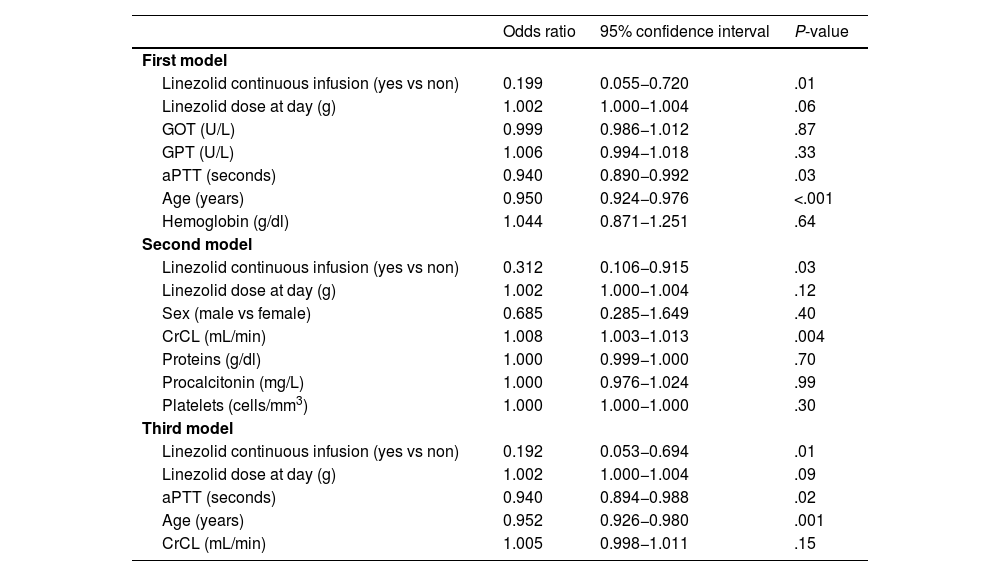
Multivariate regression analysis was carried out to determine that variables were associated with subtherapeutic linezolid concentrations (Table 2). We included those variables showing a P-value ≤.10 in the comparison between subjects with and without subtherapeutic linezolid concentrations. In addition, we included 2 clinical variables that could influence on subtherapeutic linezolid (linezolid dose at day and linezolid continuous infusion). There were not included all variables in a single regression model to avoid an overfitting effect. We constructed a final multiple logistic regression model with those variables that showed P-value ≤.10 in some of the partial regression models. In the first model, we found that linezolid continuous infusion (P = .01), aPTT (P = .03), and age (P < .001) were associated with subtherapeutic linezolid concentrations; and not linezolid dose at day, GPT, GOT and hemoglobin. In the second model, we found that linezolid continuous infusion (P = .03), and CrCl (P = .004) were associated with subtherapeutic linezolid concentrations; and not linezolid dose at day, sex, proteins, procalcitonin, and platelets. Finally, in the third model (constructed with those variables that showed P-value ≤.10 in some of the two previous regression models), we found that linezolid continuous infusion (P = .01), aPTT (P = .02) and age (P = .001) were associated with lower risk of subtherapeutic linezolid concentrations.
Multiple logistic regression analyses to predict subtherapeutic linezolid concentrations.
| Odds ratio | 95% confidence interval | P-value | |
|---|---|---|---|
| First model | |||
| Linezolid continuous infusion (yes vs non) | 0.199 | 0.055−0.720 | .01 |
| Linezolid dose at day (g) | 1.002 | 1.000−1.004 | .06 |
| GOT (U/L) | 0.999 | 0.986−1.012 | .87 |
| GPT (U/L) | 1.006 | 0.994−1.018 | .33 |
| aPTT (seconds) | 0.940 | 0.890−0.992 | .03 |
| Age (years) | 0.950 | 0.924−0.976 | <.001 |
| Hemoglobin (g/dl) | 1.044 | 0.871−1.251 | .64 |
| Second model | |||
| Linezolid continuous infusion (yes vs non) | 0.312 | 0.106−0.915 | .03 |
| Linezolid dose at day (g) | 1.002 | 1.000−1.004 | .12 |
| Sex (male vs female) | 0.685 | 0.285−1.649 | .40 |
| CrCL (mL/min) | 1.008 | 1.003−1.013 | .004 |
| Proteins (g/dl) | 1.000 | 0.999−1.000 | .70 |
| Procalcitonin (mg/L) | 1.000 | 0.976−1.024 | .99 |
| Platelets (cells/mm3) | 1.000 | 1.000−1.000 | .30 |
| Third model | |||
| Linezolid continuous infusion (yes vs non) | 0.192 | 0.053−0.694 | .01 |
| Linezolid dose at day (g) | 1.002 | 1.000−1.004 | .09 |
| aPTT (seconds) | 0.940 | 0.894−0.988 | .02 |
| Age (years) | 0.952 | 0.926−0.980 | .001 |
| CrCL (mL/min) | 1.005 | 0.998−1.011 | .15 |
GOT = glutamate oxaloacetate transaminase; GPT = glutamate pyruvate transaminase; aPTT = Activated partial thromboplastin time; CrCL = creatinine clearance.
As far as we know, this is the largest study reporting data on factors associated with subtherapeutic linezolid concentrations in critically ill patients. That we know, our study is the first one reporting that continuous infusion was associated with lower subtherapeutic linezolid concentrations in critically ill patients controlling for others factor risk.
Different studies have determined blood linezolid concentrations in patients of all hospital wards and did not provide data specifically on critically ill patients.4–23 In other studies, data of critically ill patients were reported24–34 but the highest of all those studies reporting data about the factors associated with subtherapeutic linezolid concentrations in critically ill patients was that by Taubert et al. with 52 patients.27 In the study by Cattaneo et al. were included 3250 samples from 1540 patients, but the number of critically ill patients included was not reported.22 In the study by Pea et al., 2484 samples were included from 1049 patients, and 210 (20.0%) of those patients were admitted in ICU; but it was not reported specifically data of blood linezolid concentrations on critically ill patients.23 The study by Xu et al. with 330 critically ill patients was carried out to determine that factors are associated with supratherapeutic linezolid concentrations, but no to determine that factors were associated with subtherapeutic linezolid concentrations.24 In the study by Wang et al. with 152 critically ill patients was not reported that factors were associated with subtherapeutic linezolid concentrations.25 The study by Dong et al. with 70 critically ill patients was carried out to determine that factors are associated with linezolid-associated thrombocytopenia, but no to determine that factors are associated with subtherapeutic linezolid concentrations.26 Thus, our study (n = 168 patients) is the larger study reporting data on factors associated with subtherapeutic linezolid concentrations in critically ill patients.
The rate of subtherapeutic linezolid concentrations varies between the different studies from none in the study by Cojutti et al.,21 12% in the study by Cattaneo et al.,22 12.6% cases in the study by Pea et al.,23 27% in the study by Wang et al.,25 and 29.5% in the study by Morata et al.,20 and 50% in the study by Zoller et al.28 However, the rate of subtherapeutic linezolid concentrations found in our study (47.0%) is within of range published in other studies studies on critically ill patients, as 27% in the study by Wang et al.25 and 50% in the study by Zoller et al.28
We found that linezolid continuous infusion, older and high aPTT protects from the risk of subtherapeutic linezolid concentrations. We did not find an association between CrCl and subtherapeutic linezolid concentrations; however, it is possible that the association that we found between CrCl and age could influence this finding. We think that the protector effect of older on the risk of subtherapeutic linezolid concentrations could be related to a lower CrCl; or in other words, the higher risk of subtherapeutic linezolid concentrations in young could be related to a higher CrCl. Thus, it is possible that young population need higher linezolid dose to avoid subtherapeutic linezolid concentrations. We think, that is possible that increasing the sample size could appear other variables associated subtherapeutic linezolid concentrations (included CrCl, linezolid dose at day, and others).
The most important new finding of our study was that the administration of linezolid by continuous infusion in comparison with intermittent infusion was an independent factor associated with lower risk of subtherapeutic linezolid concentrations in critically ill patients. In other studies of limited sample size,35–39 in fact the study of highest sample size was carried our by Soraluce et al. including 51 patients,35 has been found that continuous infusion in respect to intermittent infusion showed lower rate of subtherapeutic linezolid concentrations in critically ill patients; however in those studies was not performed a regression analysis to determine whether continuous infusion is an independent protector factor of subtherapeutic linezolid concentrations. Thus, we know our study is the first one reporting that continuous infusion was associated with lower subtherapeutic linezolid concentrations controlling for others factor risk in critically ill patients.
We must recognize some limitations in our study such as the absence of determinations of blood linezolid concentrations during the follow-up, that type of linezolid administration (continuous or intermittent infusion) was not randomized, that we could not described blood linezolid concentrations in patients with renal replacement therapy because were excluded from the study, that we did not register the evolution of the patients according to whether or not they required dose adjustments of linezolid, and that is possible that increasing the sample size could appear other variables associated subtherapeutic linezolid concentrations.
ConclusionAs far as we know, this is the largest study reporting data on factors associated with subtherapeutic linezolid concentrations in critically ill patients. That we know, our study is the first one reporting that linezolid continuous infusion was independently associated with lower risk of subtherapeutic linezolid concentrations in critically ill patients. We think that it could be interesting to conduct randomized studies to confirm the findings of our preliminary study.
- -
Linezolid continuous infusion was independently associated with lower risk of subtherapeutic linezolid concentrations in critically ill patients.
- -
High age was independently associated with lower risk of subtherapeutic linezolid concentrations in critically ill patients.
- -
There is a negative association creatinine clearance and age.
Leonardo Lorente and Jonathan González conceived, designed and coordinated the study, participated in acquisition and interpretation of data. Leonardo Lorente drafted the manuscript. Jonathan González, Sergio Pérez Reyes, Cristo Yared Pérez Martín, Mario Rodín and Santiago Viera participated in acquisition of data. Alejandro Jiménez participated in the statistical analysis and interpretation of data. All authors revised the manuscript critically for important intellectual content and made the final approval of the version to be published.
Declaration of Generative AI and AI-assisted technologies in the writing processNone.
FundingNone.
The authors do not have any financial interest to disclose.