

Liver failure, either acute (ALF) or acute-on-chronic (ACLF), is characterized by hepatocellular dysfunction, systemic inflammation, and multiorgan failure, leading to high mortality without liver transplantation (LT). However, LT is limited by organ shortages and medical contraindications, necessitating alternative therapeutic strategies.
Biological liver support systems, incorporate functional hepatocytes to partially restore hepatic metabolic functions, though clinical trials have not demonstrated a survival benefit. Artificial systems, such as albumin dialysis (MARS, Prometheus), facilitate toxin removal, though evidence remains limited.
Continuous renal replacement therapy, while not specific for liver failure, is essential in patients with severe hyperammonemia or acute kidney injury, aiding in ammonia clearance and fluid balance control.
Plasma exchange (PE) has promising detoxification and immunomodulatory effects, improving survival in ALF. In ACLF, PE may reduce systemic inflammation, though evidence remains limited.
Further studies are needed to optimize ECLS therapies, refine patient selection, and establish their role in ALF and ACLF management.
La insuficiencia hepática, ya sea aguda (IHA) o aguda sobre crónica (ACLF), se caracteriza por disfunción hepatocelular, inflamación sistémica y fallo multiorgánico, con una alta mortalidad en ausencia de trasplante hepático (TH). Sin embargo, el TH está limitado por la escasez de órganos y contraindicaciones médicas, lo que ha motivado el desarrollo de terapias de soporte extracorpóreo. Los sistemas de soporte hepático biológico, diseñados para restaurar funciones metabólicas mediante hepatocitos funcionales, no se utilizan actualmente en la práctica clínica. Entre los sistemas artificiales, técnicas como MARS y Prometheus permiten la eliminación de toxinas unidas a albúmina, aunque su uso ha disminuido y no han demostrado beneficio en la supervivencia. La terapia de reemplazo renal continua es útil en pacientes con hiperamoniemia o lesión renal aguda. El intercambio plasmático ha demostrado beneficios en la IHA y podría tener un rol en el ACLF. Se requieren estudios para definir su papel clínico.
Liver failure is a life-threatening condition that can present as acute liver failure (ALF) or acute-on-chronic liver failure (ACLF), both of which are characterized by severe hepatocellular dysfunction, an exacerbated systemic inflammatory response, and a high risk of multiorgan failure, resulting in a poor prognosis in the absence of effective treatment.1,2 When there is no response to initial treatment, liver transplantation (LT) remains the only curative strategy. Its availability is restricted not only by the limited supply of donor organs but also by the inability to perform the procedure in certain patients due to medical contraindications, such as active neoplasms, uncontrolled infections, or severe comorbidities that compromise postoperative viability.3
In this context, extracorporeal liver support (ECLS) has gained increasing interest as complementary therapeutic strategies aimed at reducing circulating toxic burden, modulating the inflammatory response, and providing metabolic support, with the objective of improving patient outcomes either by facilitating spontaneous liver recovery or serving as a bridge to LT.4,5
From a functional perspective, ECLS devices can be classified into biological and artificial systems. Biological systems have been designed to provide temporary metabolic and synthetic liver support through the use of functional hepatocytes in an extracorporeal circuit. Although they have a strong physiological basis, clinical trials have not demonstrated a significant impact on survival, which limits their clinical application and keeps their development in an experimental phase.6,7
Artificial liver support systems include albumin dialysis such as MARS (molecular adsorbent recirculating system) and Prometheus, hemoadsorption techniques, and therapeutic plasma exchange (PE). Their mechanisms of action involve the removal of water-soluble and protein-bound toxins, modulation of the systemic inflammatory response, and optimization of hemodynamic stability. Among these modalities, PE has demonstrated the most significant clinical benefit in the context of ALF,8 with evidence supporting improved transplant-free survival and reduced intracranial hypertension. Meanwhile, albumin dialysis and hemoadsorption have been primarily evaluated in ACLF, showing favorable effects on hepatic encephalopathy and hemodynamic stability, although their impact on long term survival remains inconclusive.9–11
Similarly, continuous renal replacement therapy (CRRT), while not specifically designed for liver failure management, plays a crucial role in patients with significant hyperammonemia or acute kidney injury (AKI). Early initiation has been shown to be beneficial in cases with advanced encephalopathy and ammonia levels >150 µmol/L.12,13
Despite advances in this field, the impact of extracorporeal liver support systems on survival remains a subject of debate. This narrative review aims to provide a detailed analysis of current advancements in extracorporeal liver support strategies, evaluating their mechanisms of action, clinical applications, limitations, and future perspectives in the treatment of ALF and ACLF.
Acute liver failure: pathophysiology, diagnosis, and initial managementAcute liver failure is a rare but life-threatening condition defined by severe hepatic dysfunction, coagulopathy (INR > 1.5), and hepatic encephalopathy (HE) in patients without preexisting chronic liver disease.1,14 ALF is associated with high mortality, often requiring emergency liver transplantation as the only curative treatment.15
The etiology of ALF is diverse, with acetaminophen overdose being the leading cause in developed countries.16 Other causes include viral hepatitis (HAV, HBV, HEV, CMV, herpes simplex virus), autoimmune hepatitis, Wilson’s disease, toxins such as Amanita phalloides, and pregnancy-related conditions like HELLP syndrome or acute fatty liver of pregnancy. Ischemic hepatitis due to cardiovascular instability is another potential trigger.
ALF is characterized by massive hepatocyte necrosis, leading to systemic inflammation and multi-organ failure.17 Damage-associated molecular patterns (DAMPs) and pathogen-associated molecular patterns (PAMPs) activate an inflammatory cascade, triggering a systemic inflammatory response that contributes to complications such as intracranial hypertension due to astrocyte swelling secondary to hyperammonemia,18 AKI in up to 70% of patients,16 and immune dysfunction with a high risk of sepsis, which remains a leading cause of death.19
Early diagnosis and referral to a transplant center are critical.20 Key diagnostic tests include liver function tests, coagulation profile, arterial ammonia, blood cultures, viral serologies, autoimmune markers, and Wilson’s disease screening. Imaging studies such as abdominal Doppler ultrasound are essential to assess hepatic vasculature and rule out Budd-Chiari syndrome, while brain CT is indicated in cases of suspected intracranial hypertension. Patients with altered mental status, INR > 1.5, hypoglycemia, metabolic acidosis, or progressive organ failure should be transferred to a specialized liver transplant center as soon as possible.1
Management in the ICU focuses on hemodynamic stabilization, neurological monitoring, renal support, and infection control. Fluid resuscitation with crystalloids and norepinephrine as the vasopressor of choice are standard for circulatory support.15 Intracranial hypertension is managed with non-invasive monitoring techniques such as transcranial Doppler and optic nerve sheath diameter assessment.18 Hypertonic saline or mannitol is used to reduce cerebral edema, and in refractory cases, barbiturate coma or moderate hypothermia may be considered. CRRT is recommended to lower ammonia levels and prevent neurological deterioration.13 Given the high risk of infections, early empirical antibiotic therapy is advised, particularly in patients with bacteremia, pneumonia, or spontaneous infections.21
ALF requires early recognition, intensive care management, and timely liver transplantation evaluation. Despite advances in supportive care, transplantation remains the only definitive treatment for patients with irreversible liver injury.22
Acute-on-chronic liver failure: pathophysiology, diagnosis, and initial managementACLF is a distinct and severe clinical syndrome that arises in patients with chronic liver disease, particularly cirrhosis, and is characterized by acute decompensation, the development of extrahepatic organ failures, and a high short term mortality rate. Multiple scientific societies including the European Association for the Study of the Liver (EASL), the North American Consortium for the Study of End-Stage Liver Disease (NACSELD), the Asian Pacific Association for the Study of the Liver (APASL), and the Chinese Group on the Study of Severe Hepatitis B (COSSH)— have proposed different definitions of ACLF. These definitions vary significantly in their diagnostic criteria, particularly regarding the type and number of organ failures required, the stage of underlying liver disease (with or without cirrhosis), and the role assigned to systemic inflammation and precipitating events in the pathophysiology of the syndrome.2,23–27
Epidemiological data indicate that ACLF affects approximately 35% of cirrhotic patients admitted to the hospital.28 According to the CANONIC study and recent meta-analyses, renal failure is the most frequent organ failure (44%), followed by circulatory and neurological failure, while respiratory failure is the least common (11%).2,29 Ninety-day mortality reaches 58%, increasing with the number of organ failures.30
The pathophysiology of ACLF is complex and has been linked to systemic inflammation, intestinal dysbiosis, bacterial translocation, and mitochondrial dysfunction.31,32
The inflammatory response is triggered by PAMPs and DAMPs, activating pattern recognition receptors (PRRs), such as CD14 and TLR4, in Kupffer cells, leading to cytokine release.32,33 The immune imbalance in ACLF contributes to dysfunction of phagocytic cells (neutrophils, monocytes, macrophages) and lymphocytes, impairing bactericidal capacity and increasing the risk of infections.23
The most frequent triggers of ACLF in Europe are bacterial infections (65–97%) and severe alcoholic hepatitis.33,34 Other less common triggers include gastrointestinal bleeding, viral infections, drug-induced liver injury, and trauma.
ACLF management is multidisciplinary and relies on three fundamental pillars: identification and treatment of the precipitating factor, prevention and support of organ failure, and liver transplant evaluation.
Identification and treatment of the precipitating factorInfections are the most common trigger of ACLF (53–65% according to CANONIC and PREDICT studies).23 Prompt identification of the infectious source and early initiation of broad-spectrum antibiotics are crucial, considering the high prevalence of multidrug-resistant pathogens (up to 34%) in these patients.31,35 Antifungal therapy should be considered in selected high-risk patients.
Severe alcoholic hepatitis is another frequent trigger. The Lille score is useful for assessing corticosteroid response. In gastrointestinal bleeding, early treatment with vasoconstrictors (terlipressin, octreotide) and endoscopic therapy improves organ perfusion and reduces ACLF progression.
Prevention and management of organ failureThe management of organ failure in ACLF follows principles similar to septic shock treatment, although specific evidence is limited.2,27
- •
Renal failure: This is the most frequent organ failure in ACLF. Volume optimization with albumin and consideration of vasopressors in hepatorenal syndrome are recommended. Renal replacement therapy (RRT) is indicated in oligoanuria, volume overload, or refractory metabolic acidosis.2,35
- •
Circulatory failure: Hemodynamic dysfunction in ACLF involves systemic vasodilation and tissue hypoperfusion. Fluid resuscitation should be guided by advanced hemodynamic monitoring. Norepinephrine is the first-line vasopressor.36
- •
Coagulopathy: Coagulation should be assessed with ROTEM/TEG, and fresh frozen plasma transfusion should be restricted to active bleeding or planned invasive procedures.37
- •
Respiratory failure: Oxygen therapy should be provided, and in severe cases, protective mechanical ventilation should be considered.2
- •
Hepatic encephalopathy (HE): Lactulose, rifaximin, and nutritional support are the mainstays of treatment. Patients with grade III–IV HE should be intubated to protect the airway.2
Liver transplantation is the most effective intervention for improving survival in ACLF patients. The 28-day survival probability for ACLF grade 2 and 3 is 42.9% and 12.8%, respectively.30 However, post-transplant survival rates (80–90%) are comparable to other indications.3,38
The 2024 EASL guidelines recommend prioritizing ACLF grade 3 patients with CLIF-C ACLF score <64 for liver transplantation.39 The CLIF-C ACLF score, developed by the EASL-CLIF Consortium, is a prognostic model designed to predict short-term mortality in patients with ACLF. It is calculated based on the number and severity of organ failures (as defined by the CLIF-OF score), in addition to age and white blood cell count.23 Selection should be based on clinical course and reversibility of organ failure. The use of evolving prognostic scores (CLIF-C ACLF) has been proposed for decision-making, as MELD-Na and Child-Pugh do not account for respiratory, circulatory, or neurological failures.2,40
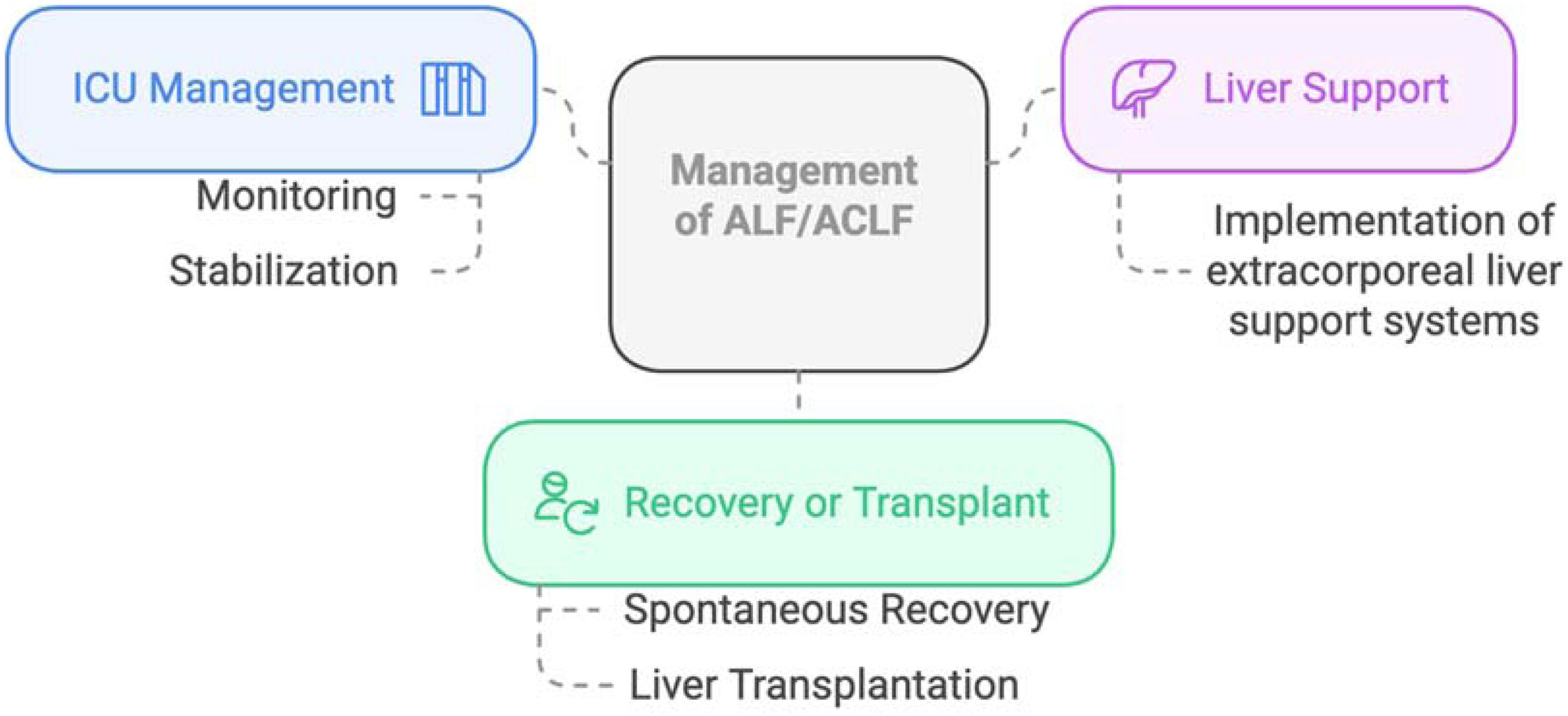
In patients ineligible for liver transplantation and with progressive deterioration, treatment should be adjusted based on futility criteria39 (Fig. 1).
Liver support systems in acute liver failureLiver support systems are designed to temporarily replace hepatic functions synthesis, metabolism, and detoxification with the aim of improving clinical outcomes and serving as a bridge to either liver transplantation or spontaneous recovery. Despite advances in extracorporeal technologies, no device has yet demonstrated a definitive impact on long-term survival in acute liver failure.1,5,41 These systems can be classified into artificial and bioartificial devices. Bioartificial systems incorporate cell lines or hepatocytes, offering both detoxification and metabolic support.15,42,43 In contrast, artificial systems rely on membranes with varying cutoff points and filtration and adsorption mechanisms to facilitate plasma detoxification and immunomodulation, but they do not provide synthetic function.
Bioartificial liver support systemsBioartificial liver systems incorporate human or porcine hepatocytes to enhance detoxification capacity and liver synthetic function. The extracorporeal liver assist device (ELAD), which uses human C3A cells, has been evaluated in randomized trials. A study in 24 ALF patients showed no clear survival benefit (78% vs. 75% in the good prognosis group and 33% vs. 25% in transplant-listed patients).44 Another study on ELAD in severe alcoholic hepatitis also failed to show an improvement in 91-day survival (HR 1.03, 95% CI 0.69–1.53), leading to the discontinuation of the device’s development.45 HepatAssist, a device containing porcine hepatocytes, was evaluated in a multicenter clinical trial, where no significant difference in 30-day survival (71% vs. 62%; p = 0.26) was found, although there was a trend toward improved outcomes in patients without primary graft dysfunction.6
Artificial liver support systemsArtificial liver support systems such as MARS and Prometheus, have been extensively studied in the management of ALF. These devices use albumin as a carrier to bind and remove endogenous toxins.42 The MARS system can remove both lipophilic and hydrophilic toxins up to 50 kDa, including bilirubin, ammonia, creatinine, urea, and cytokines.15,42 In contrast, Prometheus, which is based on plasma fractionation and adsorption, has a significantly higher membrane cutoff point (250 kDa), allowing the passage of proteins, including albumin. By using endogenous albumin, it achieves a greater reduction in bilirubin, bile acids,46 and amino acids involved in hepatic encephalopathy.47,48
Several studies have evaluated MARS in ALF, but only one was controlled and randomized, albeit unblinded, including 102 patients. This trial found no significant difference in 6-month survival between the MARS-treated group and the standard care group (84.9% vs. 75.5%; p = 0.28).14 However, in the subgroup of ALF patients due to acetaminophen overdose, there was a trend toward improved survival with MARS (85% vs. 68.4%; p = 0.46). These findings should be interpreted cautiously, as 75% of the included patients underwent liver transplantation within the first 24 h.11 Nevertheless, other reported benefits include hemodynamic improvement and a reduction in hepatic encephalopathy.49 More recently, a propensity-matched study compared 104 ALF patients treated with MARS to 416 controls without MARS, demonstrating improved transplant-free survival at 21 days, particularly in ALF secondary to acetaminophen ingestion.9 Regarding Prometheus, studies have shown a reduction in bilirubin50 and other toxic compounds51 but no impact on long-term survival.10,52
Continuous renal replacement therapiesAlthough continuous renal replacement therapies (CRRT) are not specifically designed for ALF, they represent the most widely available and routinely used form of artificial blood purification in intensive care units. While CRRT does not effectively remove protein-bound toxins, its early initiation is recommended in patients with hepatic encephalopathy or hyperammonemia (>150 μmol/L or twice the upper limit of normal), even in the absence of acute kidney injury (AKI), as hyperammonemia is strongly associated with cerebral edema and increased intracranial pressure.13,37 By reducing ammonia levels, CRRT contributes to neurological stabilization and improved overall prognosis, with its effectiveness directly linked to the timing of initiation and prescribed dose.12,13,53 No significant differences have been observed between different CRRT modalities. Additionally, CRRT facilitates the non-selective removal of small and medium-sized water-soluble molecules and cytokines, contributing to systemic homeostasis.
To enhance the clearance of medium-sized molecules such as cytokines and ammonia alternative techniques like high-volume hemofiltration (HVHF, 50–70 mL/kg/h) or high-cutoff membranes have been explored. However, these approaches may result in increased losses of essential substances, including antibiotics, nutrients, and albumin, and their impact on survival remains unproven.54 Nevertheless, a recent meta-analysis suggests a survival benefit in patients treated with CRRT [risk ratio (RR) 0.83; 95% confidence interval (CI) 0.70–0.99, p = 0.04, I² = 50%], compared to those who did not receive CRRT.55
These findings support the use of CRRT not only for renal support but also as a potential neuroprotective and immunomodulatory strategy in patients with ALF. CRRT can also be used in combination with other supportive therapies to optimize patient management. Additionally, recent case series in cirrhotic patients have reported promising results with hemoadsorption, showing reductions in bilirubin levels and improvement in hepatic encephalopathy. However, these findings require confirmation in prospective studies.56
Plasma exchangePlasma exchange has emerged as one of the most promising strategies for the treatment of acute liver failure due to its ability to remove toxins, reduce systemic inflammation, and modulate the immune response. Multiple clinical trials have evaluated the impact of PE on ALF survival. A multicenter study in 182 patients demonstrated that high-volume plasma exchange (HVPE, 3 plasma volumes per session) improved hospital survival (58.7% vs. 47.8%; p = 0.008) compared to standard medical treatment.8 Another trial in India found that standard-volume plasma exchange (SVPE, 1.5–2 plasma volumes per session) significantly increased transplant-free survival at 21 days (75% vs. 45%; p = 0.04).57
The therapeutic benefits of plasma exchange in ALF are thought to result from several pathophysiological mechanisms:
- •
Detoxification: Removal of pro-inflammatory cytokines (IL-6, TNF-α), DAMPs and PAMPs, modulating systemic inflammation.8
- •
Control of intracranial hypertension: Reduction of ammonia levels and improved cerebral perfusion, decreasing the risk of cerebral edema, one of the leading causes of mortality in ALF.
- •
Immune regulation: Restoration of monocyte phagocytic function, strengthening the immune response and reducing immune dysfunction associated with ALF.57
- •
Hemodynamic improvement: Decreased lactate levels and improved global tissue perfusion enhance oxygen delivery and may support the recovery of organ function, including liver regeneration.
PE has shown benefits in ALF patients who are not eligible for liver transplantation due to medical or psychiatric contraindications, providing a therapeutic alternative that improves survival and stabilizes clinical condition. A subgroup analysis found that non-transplant-eligible patients receiving HVPE had significantly higher survival compared to those receiving standard medical treatment (28% vs. 36%; p < 0.05).8
While HVPE has been the most studied protocol, recent studies suggest that SVPE may provide similar benefits with fewer adverse effects. A trial demonstrated that SVPE resulted in significant reduction in SIRS (84% vs. 26%; p = 0.02), decreased ammonia and lactate levels, and improved hepatic function. These findings highlight the potential role of intermediate-volume plasma exchange (1.5–2 plasma volumes) as a clinically effective and pragmatic alternative to high-volume protocols, particularly in resource-limited settings. Although further multicenter studies are warranted to confirm these results, this randomized trial supports its consideration as a valuable therapeutic option in patients with ALF who are not eligible for liver transplantation.8,57
Considerations for plasma exchange in ALFAn important consideration in the application of plasma exchange in acute liver failure is that fresh frozen plasma (FFP) is used as the replacement fluid during the procedure.8,57 As a result, INR is no longer a reliable prognostic marker once PE has been initiated, since the correction of coagulopathy may mask the true extent of hepatic synthetic dysfunction.1
Furthermore, the selection of patients for PE should be individualized based on clinical presentation, the estimated probability of spontaneous liver recovery, and candidacy for liver transplantation. Appropriate patient selection is essential to maximize benefit and avoid unnecessary risks.
liver support systems in acute-on-chronic liver failureExtracorporeal liver support in acute-on-chronic liver failure aims to modulate systemic inflammation, stabilize organ function, and serve as a bridge to liver transplantation or spontaneous recovery. The pathophysiology of ACLF is complex and multifactorial, involving immune dysfunction, systemic inflammation, endothelial injury, and mitochondrial dysfunction, all contributing to progressive multiorgan failure.58 Given the high short-term mortality associated with ACLF, ECLS has emerged as a complementary therapeutic strategy to provide temporary liver support while addressing extrahepatic organ dysfunction.4
Various artificial and bioartificial liver support systems have been developed as adjunctive therapies. Among the artificial systems, albumin dialysis (MARS, Prometheus), hemoadsorption, and plasma exchange facilitate the removal of protein-bound toxins, cytokines, and ammonia, improving hemodynamic stability and hepatic encephalopathy.5,46,49 However, their impact on survival remains controversial. Bioartificial systems, incorporating functional hepatocytes, aim to restore metabolic and synthetic liver functions, though their clinical application remains experimental.5,45
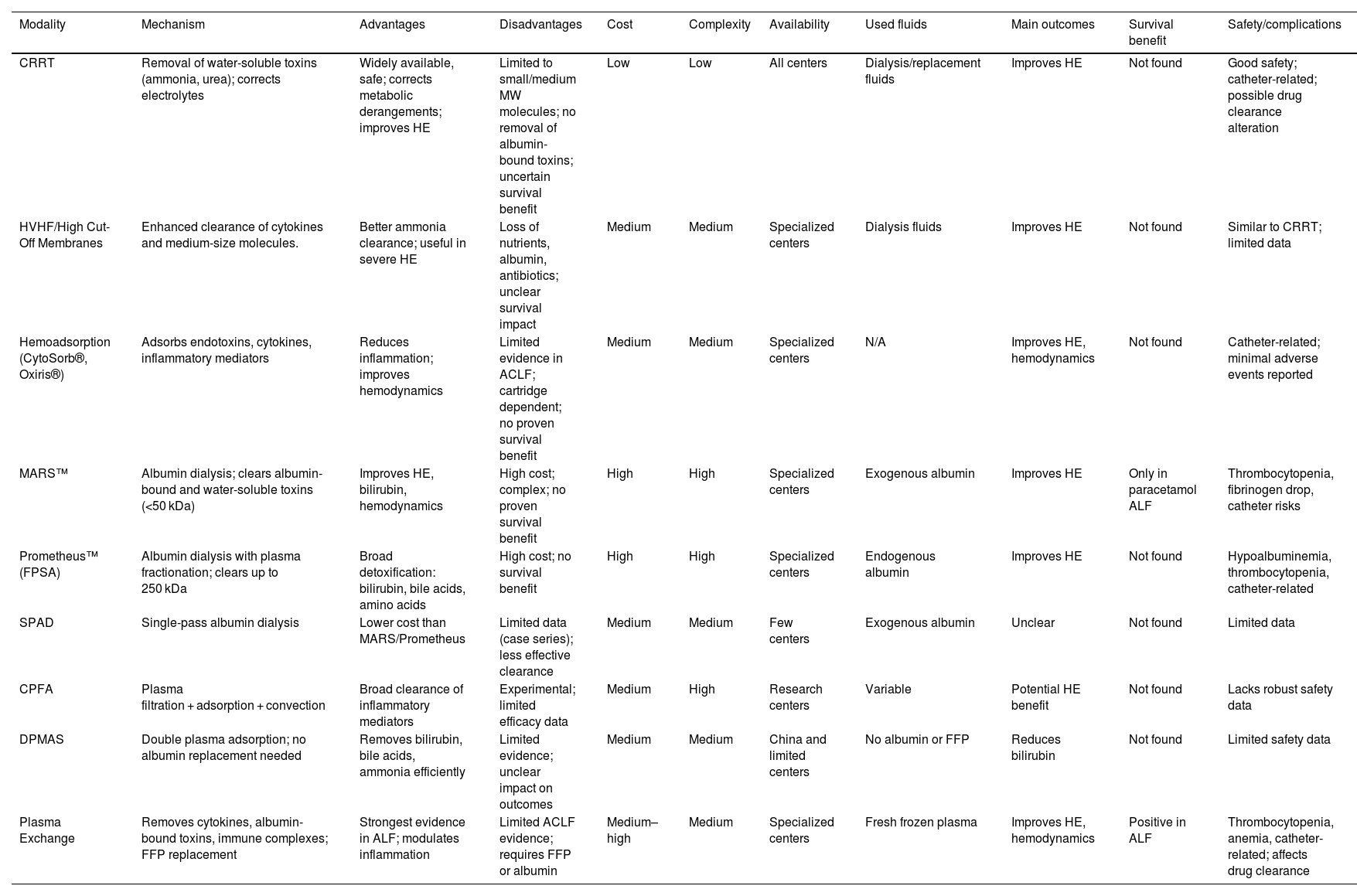
Several extracorporeal liver support modalities are currently available, each targeting specific pathophysiological pathways involved in ACLF. CRRT and high-volume hemofiltration focus primarily on ammonia clearance and metabolic stabilization. Hemoadsorption techniques, such as CytoSorb® and Oxiris®, aim to attenuate systemic inflammation by removing circulating cytokines and endotoxins. Other hemoadsorption systems, such as the HA330 and HA380 (Jafron®), have also been used for toxin and cytokine removal in patients with liver failure, particularly in Asian centers. Although preliminary reports suggest potential benefit, their clinical use remains investigational outside these regions due to the lack of high-quality controlled studies. Albumin dialysis systems including MARS and Prometheus are designed to eliminate albumin-bound toxins, bilirubin, and bile acids, with additional benefits on hemodynamic stability and hepatic encephalopathy. Plasma exchange, which combines detoxification with immune modulation, remains the extracorporeal modality with the strongest evidence in acute liver failure and is increasingly being investigated in the context of ACLF. Additional modalities such as SPAD (single-pass albumin dialysis), CPFA (coupled plasma filtration and adsorption), and DPMAS (double plasma molecular adsorption system) have also been explored in ACLF, though clinical experience remains limited, and evidence is still emerging. These therapies are further detailed in Table 1.
Comparative overview of extracorporeal liver support modalities in acute-on-chronic liver failure.
| Modality | Mechanism | Advantages | Disadvantages | Cost | Complexity | Availability | Used fluids | Main outcomes | Survival benefit | Safety/complications |
|---|---|---|---|---|---|---|---|---|---|---|
| CRRT | Removal of water-soluble toxins (ammonia, urea); corrects electrolytes | Widely available, safe; corrects metabolic derangements; improves HE | Limited to small/medium MW molecules; no removal of albumin-bound toxins; uncertain survival benefit | Low | Low | All centers | Dialysis/replacement fluids | Improves HE | Not found | Good safety; catheter-related; possible drug clearance alteration |
| HVHF/High Cut-Off Membranes | Enhanced clearance of cytokines and medium-size molecules. | Better ammonia clearance; useful in severe HE | Loss of nutrients, albumin, antibiotics; unclear survival impact | Medium | Medium | Specialized centers | Dialysis fluids | Improves HE | Not found | Similar to CRRT; limited data |
| Hemoadsorption (CytoSorb®, Oxiris®) | Adsorbs endotoxins, cytokines, inflammatory mediators | Reduces inflammation; improves hemodynamics | Limited evidence in ACLF; cartridge dependent; no proven survival benefit | Medium | Medium | Specialized centers | N/A | Improves HE, hemodynamics | Not found | Catheter-related; minimal adverse events reported |
| MARS™ | Albumin dialysis; clears albumin-bound and water-soluble toxins (<50 kDa) | Improves HE, bilirubin, hemodynamics | High cost; complex; no proven survival benefit | High | High | Specialized centers | Exogenous albumin | Improves HE | Only in paracetamol ALF | Thrombocytopenia, fibrinogen drop, catheter risks |
| Prometheus™ (FPSA) | Albumin dialysis with plasma fractionation; clears up to 250 kDa | Broad detoxification: bilirubin, bile acids, amino acids | High cost; no survival benefit | High | High | Specialized centers | Endogenous albumin | Improves HE | Not found | Hypoalbuminemia, thrombocytopenia, catheter-related |
| SPAD | Single-pass albumin dialysis | Lower cost than MARS/Prometheus | Limited data (case series); less effective clearance | Medium | Medium | Few centers | Exogenous albumin | Unclear | Not found | Limited data |
| CPFA | Plasma filtration + adsorption + convection | Broad clearance of inflammatory mediators | Experimental; limited efficacy data | Medium | High | Research centers | Variable | Potential HE benefit | Not found | Lacks robust safety data |
| DPMAS | Double plasma adsorption; no albumin replacement needed | Removes bilirubin, bile acids, ammonia efficiently | Limited evidence; unclear impact on outcomes | Medium | Medium | China and limited centers | No albumin or FFP | Reduces bilirubin | Not found | Limited safety data |
| Plasma Exchange | Removes cytokines, albumin-bound toxins, immune complexes; FFP replacement | Strongest evidence in ALF; modulates inflammation | Limited ACLF evidence; requires FFP or albumin | Medium–high | Medium | Specialized centers | Fresh frozen plasma | Improves HE, hemodynamics | Positive in ALF | Thrombocytopenia, anemia, catheter-related; affects drug clearance |
CRRT, continuous renal replacement therapy; HVHF, high-volume hemofiltration; MARS, molecular adsorbent recirculating system; FPSA, fractionated plasma separation and adsorption; SPAD, single-pass albumin dialysis; CPFA, coupled plasma filtration and adsorption; DPMAS, double plasma molecular adsorption system; PE, plasma exchange; HE, hepatic encephalopathy; FFP, fresh frozen plasma; ALF, acute liver failure; MW, molecular weight.
Despite these advances, heterogeneity in ACLF definitions, variability in study designs, and differences in patient selection continue to hinder the standardization of these therapies. While some studies suggest potential benefits of ECLS in reducing systemic inflammation, improving hemodynamic parameters, and stabilizing organ function, no conclusive evidence has demonstrated a survival advantage.59
Additionally, patient selection remains a critical challenge. Identifying which patients may benefit most from ECLS, along with defining the optimal timing, duration, and combination of therapies, requires further research. Well-designed prospective studies are essential to determine the optimal role of ECLS in ACLF management, its impact on clinical outcomes, and its integration into liver transplantation criteria.2,60,61
Currently, the APACHE randomized clinical trial (Short-term Survival of Subjects with Acute-on-chronic Liver Failure After Plasma Exchange With Human Serum Albumin 5%, ClinicalTrials.gov ID NCT03702920) is ongoing, evaluating the efficacy of extracorporeal liver support in ACLF. The results of this study will be crucial in defining the definitive role of these therapies in clinical practice.
There are contraindications to the use of extracorporeal liver support in ACLF, including irreversible multiorgan failure, advanced malignancies, irreversible neurological damage, uncontrolled active bleeding, or untreatable severe infections. In such cases, ECLS may be futile or even harmful, and careful individualized patient selection is essential.
Future research should focus on personalized treatment strategies that integrate ECLS with other organ support modalities to improve outcomes in this critically ill population.
ECLS complications and promising approach with challengesExtracorporeal liver support is a promising therapeutic approach for patients with ALF or ACLF. However, its implementation is associated with a range of clinical complications, management challenges, and logistical considerations that must be addressed to optimize efficacy and safety.
Despite having a good safety profile,46 some clinical complications are related to the catheter and the risk of circuit thrombosis, sometimes requiring anticoagulation with heparin or citrate, without a significant increase in bleeding complications in these patients.62 Thrombocytopenia and anemia have also been described as an adverse event.63 Additionally, these systems could eliminate certain antibiotics with low protein binding such as meropenem and quinolones, necessitating dose adjustment and monitoring if possible.64 And they may affect drug concentrations through direct removal or via removal of metabolizing enzymes. In general, all daily drug dosing should be administered after the session.63 Furthermore, PE could induce side effects associated with the use of replacement fluid related (frozen plasma) like allergic reactions, transfusion-related acute lung injury, transmission of infectious diseases or hypocalcemia.63
It is important an optimal management with intensive hemodynamic and metabolic monitoring to detect complications early, adjustments in anticoagulation strategies based on patient risk profiles and optimization of fluid balance to prevent hemodynamic instability.
The logistical challenges are multifaceted, because the high costs and technical complexity of extracorporeal liver support systems the need of ongoing education and training for physicians and nurses in handling these devices and for the coordination care among different specialties and integration with other liver transplant units to optimize patient outcomes. And lately, the patient selection criteria based on clinical and prognostic factors to maximize treatment benefits. Recent meta-analyses have further explored the impact of artificial liver support in ALF and ACLF, supporting the potential benefit of these systems in selected populations.65–67
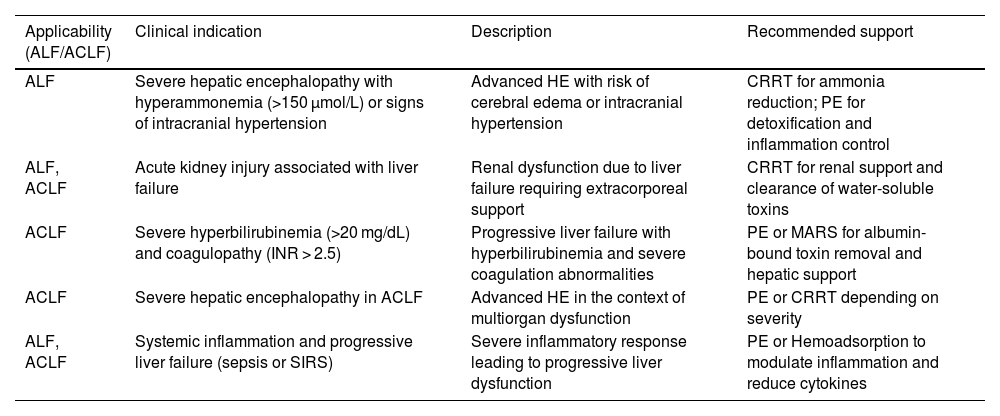
Indications for extracorporeal liver support (ECLS) in acute and acute-on-chronic liver failureThe table below outlines the key clinical indications for ECLS and the recommended extracorporeal therapies for each scenario (Table 2).
Clinical indications and recommended extracorporeal liver support therapies in ALF and ACLF.
| Applicability (ALF/ACLF) | Clinical indication | Description | Recommended support |
|---|---|---|---|
| ALF | Severe hepatic encephalopathy with hyperammonemia (>150 μmol/L) or signs of intracranial hypertension | Advanced HE with risk of cerebral edema or intracranial hypertension | CRRT for ammonia reduction; PE for detoxification and inflammation control |
| ALF, ACLF | Acute kidney injury associated with liver failure | Renal dysfunction due to liver failure requiring extracorporeal support | CRRT for renal support and clearance of water-soluble toxins |
| ACLF | Severe hyperbilirubinemia (>20 mg/dL) and coagulopathy (INR > 2.5) | Progressive liver failure with hyperbilirubinemia and severe coagulation abnormalities | PE or MARS for albumin-bound toxin removal and hepatic support |
| ACLF | Severe hepatic encephalopathy in ACLF | Advanced HE in the context of multiorgan dysfunction | PE or CRRT depending on severity |
| ALF, ACLF | Systemic inflammation and progressive liver failure (sepsis or SIRS) | Severe inflammatory response leading to progressive liver dysfunction | PE or Hemoadsorption to modulate inflammation and reduce cytokines |
ACLF, acute-on-chronic liver failure; ALF, acute liver failure; CRRT, continuous renal replacement therapy; ECLS, extracorporeal liver support; MARS, molecular adsorbent recirculating system; PE, plasma exchange; SIRS, systemic inflammatory response syndrome.
The development of extracorporeal liver support systems continues to evolve with the goal of improving outcomes in patients with ALF and ACLF. However, several challenges remain that must be addressed in future research:
- •
Optimization and personalization of treatment: Individualized strategies based on biomarkers are needed to identify patients who would benefit most from these therapies.
- •
Combination of extracorporeal therapies: The integration of PE and albumin dialysis could optimize detoxification, inflammatory modulation, and hemodynamic stabilization, potentially improving clinical outcomes in patients with liver failure.
- •
Advancements in biological liver support: Tissue engineering and the use of functional hepatocytes in bioartificial liver devices represent promising areas of investigation.
- •
Validation through multicenter clinical trials: Well-designed studies are essential to establish the impact on survival and quality of life.
- •
Application of artificial intelligence and big data: Advanced tools could optimize decision-making and improve patient response to these therapies.
ECLS systems have emerged as valuable therapeutic options for patients with ALF and ACLF, particularly those who are not candidates for LT or require bridging to LT.
Among these therapies, PE has shown the greatest impact in ALF, demonstrating benefits in reducing systemic inflammation and intracranial hypertension, ultimately improving transplant free survival. MARS, Prometheus, and hemoadsorption have been evaluated primarily in ACLF, with evidence supporting improvements in hepatic encephalopathy and hemodynamic stability, although their impact on long term survival remains inconclusive.
Furthermore, CRRT plays a crucial role in patients with severe hyperammonemia or AKI, contributing to ammonia clearance and fluid balance regulation, making it a key supportive therapy in liver failure management. Despite advancements, the long term survival benefits of ECLS remain uncertain, highlighting the need for further research to optimize the efficacy, safety, and clinical application of these therapies in the management of ALF and ACLF.
CRediT authorship contribution statementAll authors have contributed equally to the conception, drafting and critical revision of the manuscript. All have approved the final version.
Declaration of Generative AI and AI-assisted technologies in the writing processChatGPT (OpenAI) was used only for the English language enhancement of the manuscript. No generative artificial intelligence was used for content creation or data analysis.
FundingThis work has not received external funding.
The authors declare that they have no conflicts of interest.