
To determine what proportion of oral presentations from congresses of the Spanish Society of Intensive care Medicine, Critical care, and Coronary Units (SEMICYUC) are subsequently published in scientific journals.
DesignObservational descriptive study based on the analysis of oral presentations accepted at SEMICYUC congresses every other year from 2013 to 2021, both inclusive.
SettingNational SEMICYUC congresses.
ParticipantsAbstracts of oral presentations accepted at SEMICYUC congresses every other year from 2013 to 2021.
Main outcome measuresThe proportion of published oral presentations is the main outcome. Other outcome measures are time to publication, intensive care subspecialty, journal impact factor and quartile, methodological and design characteristics and funding.
ResultsA total of 250 oral presentations were analyzed of which 81 (32.4%) resulted in a publication. "Infection" category had the highest number of oral presentations (64 presentations) and the highest number of published studies (30 publications). Randomized clinical trials (66.7%) and quasi-experimental studies (62.5%) result in the highest publication rates (p=0,015). The average journal impact factor is 5.8 (range: 1.2–44.4).
ConclusionsMost abstracts presented as oral presentations at SEMICYUC congresses do not reach publication. Although only 32.4% of these are published, they appear in journals with an average impact factor of 5.8.
Determinar qué proporción de comunicaciones orales de los congresos de la Sociedad Española de Medicina Intensiva Crítica Y Unidades Coronarias (SEMICYUC) son posteriormente publicadas en revistas científicas.
DiseñoEstudio observacional descriptivo basado en el análisis de comunicaciones orales aceptadas en los congresos de la SEMICYUC de años alternos entre 2013 y 2021, ambos incluidos.
ÁmbitoCongresos nacionales de la SEMICYUC.
Pacientes o participantesAbstracts de comunicaciones orales aceptadas en los congresos de la SEMICYUC de años alternos entre 2013 y 2021.
Variables de interés principalesLa variable principal es la proporción de comunicaciones orales que derivan en publicación. Otras variables incluyen el tiempo hasta la publicación, la distribución por áreas de la medicina intensiva, el factor de impacto y cuartil de las revistas, las características metodológicas, el diseño del estudio y el tipo de financiación.
ResultadosSe analizaron 250 comunicaciones orales de las cuales 81 (32,4%) derivaron en publicación. El área de “Infección” es la que presentó más comunicaciones orales en los congresos (64 comunicaciones) y la que obtuvo más publicaciones derivadas (30 publicaciones). Los ensayos clínicos aleatorizados (66,7%) y los cuasi-experimentales (62,5%) se publican más (p=0,015). El factor de impacto promedio de las revistas es de 5,8 (1,2–44,4).
ConclusionesLa mayoría de los abstracts aceptados como comunicaciones orales en los congresos de la SEMICYUC no llegan a publicarse. Sin embargo, el 32,4 % de los que se publican lo hacen en revistas con un factor de impacto medio de 5,8.
The Spanish Society of Intensive Care Medicine, Critical Care and Coronary Units (SEMICYUC) organizes an annual national congress where approximately 600 projects are presented as oral communications (OC), oral posters, or electronic posters.
It is difficult to measure the scientific quality of congresses, although derived publications (DP) from congresses are often associated with their quality.
It is essential to know what happens to abstracts after presentation, whether they are eventually published in scientific journals, and which factors influence publication.
A systematic review published in 2018 concluded that studies with positive results, multicenter design, randomized methodology, and oral presentation have more chances of being published.1
Despite the relevance of this topic, we did not find previous studies analyzing the DP rate of intensive care congresses either nationally or internationally. Other specialties, such as orthopedic surgery,2–7 cardiology,8 anesthesiology and resuscitation9 and pharmacology,10 have addressed this issue.
EndpointsThe primary endpoint of this study was to evaluate the proportion of DP from OCs accepted at SEMICYUC congresses held in alternate years between 2013 and 2021, inclusive.
Secondary endpoints included analyzing the time from OC presentation to publication; determining which intensive care areas achieved the most DP; assessing the mean impact factor (IF) of the journals in which OCs were published and their quartile ranking, and the national geographic distribution of OCs and DP by autonomous community.
We also analyzed if the studies methodology and design influenced publication, taking into account their single-center or multicenter design and whether they were linked to doctoral theses. Finally, we assessed if the type of funding influenced the likelihood of publication.
MethodsStudy design and contextWe conducted a national, descriptive, observational study that analyzed OCs from 5 SEMICYUC congresses (2013, 2015, 2017, 2019, 2021). Alternate years were selected to reduce the volume of data while maintaining representativeness. All OCs from these five congresses were included.
Congresses held after 2021 were excluded because insufficient time had elapsed for projects to be published. Literature searches were performed in July–August 2024, and results were analyzed in September 2024.
Selection of OCsFrom all projects submitted to SEMICYUC, the scientific committee selects the best for presentation as OCs, oral posters, or electronic posters. The committee reviews all submissions anonymously and in pairs, assigning scores using established criteria. Projects selected as OCs have higher scores and accordingly are considered to be of higher quality, greater relevance, or more promising.
We analyzed only OCs, excluding posters, because OCs have more chances of being published.1
All abstracts were retrieved from the online version of Medicina Intensiva.
The OCs were categorized according to the thematic areas of intensive care established at the congresses: Cardiovascular (including hemodynamics, arrhythmias, cardiac surgery, pacemakers), Donation/Transplantation, Ethics, Hematology, Infection (including sepsis, antibiotics), Metabolism/Nutrition, Miscellaneous (including emergency medicine, toxicology, simulation, new technologies), Nephrology (including renal replacement therapies), Neurointensive Care (including critical neurological pathology, traumatic brain injury, trauma), Organization (including management and quality), Respiratory (including mechanical ventilation), and Sedation/Analgesia (including delirium).
Inclusion criteriaOCs accepted at SEMICYUC congresses in 2013, 2015, 2017, 2019, and 2021.
Exclusion criteriaOral or electronic posters and OCs not eligible for publication (e.g., opinion pieces).
VariablesFor each OC we recorded title, authors, year, institution, country, autonomous community, intensive care area, study design (single- or multicenter), methodology, funding (independent/undeclared, industry, or public/competitive grants), association with a doctoral thesis and publication status.
For each DP we recorded title, authors, year, journal, IF and quartile obtained from Journal Citation Reports (Clarivate™).
Criteria for linking a DP to an OCA publication was considered derived from an OC if it had the same objective (answering the same question in whole or in part), the same design, the same or very similar recruitment period (in the case of preliminary results), the same or very similar patient number and at least one common author.
DP search strategySource of informationWe used Google Scholar, which indexes PubMed, Elsevier, scientific societies, Dialnet and journal portals.
SearchThe search did not begin with a hypothesis or a PICO-formatted question, as is widely seen in the scientific field, but rather from the titles of OCs. To ensure that the search was as systematic, methodical and reproducible as possible, a strategy was designed beginning with a search for the full OC title in Spanish (the first 50 results were reviewed). If no DP was identified, the full title together with the first author was then searched (first 50 results). If no DP was identified at this stage, keywords from the title in English were then searched (first 50 results). The search concluded when a DP was identified or, if none was found, after these steps werecompleted. The search was conducted by a single investigator.
Statistical analysisQuantitative variables were summarized with descriptive statistics; qualitative variables were presented as counts and percentages, including missing values. Qualitative data were compared using Fisher’s exact test. Statistical significance was set at p<0.05.
Analyses were conducted with IBM SPSS Statistics for MacOS, version 29, following International Conference on Harmonisation E9 guidelines (CPMP/ICH/363/96).
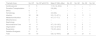
ResultsA total of 250 OCs were analyzed across the five congresses; 81 resulted in DP (32.4%). Table 1 illustrates descriptive data by congress and theme. The 2015 congress produced the most DP (n=18), and 2021 the fewest (n=14).
Number of oral communications and derived publications by thematic area and year.
| Year | 2013 | 2015 | 2017 | 2019 | 2021 | Total | ||||||||||||
|---|---|---|---|---|---|---|---|---|---|---|---|---|---|---|---|---|---|---|
| Thematic Area | No. OC | No. DP | % DP/OC | No. OC | No. DP | % DP/OC | No. OC | No. DP | % DP/OC | No. OC | No. DP | % DP/OC | No. OC | No. DP | % DP/OC | No. OC | No. DP | % DP/OC |
| Cardiovascular | 2 | 0 | – | 10 | 2 | 20.0 | 11 | 3 | 27.3 | 10 | 2 | 20.0 | 10 | 1 | 10.0 | 43 | 8 | 18.6 |
| Donation/Transplantation | 0 | 0 | – | 1 | 0 | – | 0 | 0 | – | 1 | 0 | – | 2 | 1 | 50.0 | 4 | 1 | 25.0 |
| Ethics | 2 | 0 | – | 0 | 0 | – | 0 | 0 | – | 0 | 0 | – | 0 | 0 | – | 2 | 0 | – |
| Hematology | 0 | 0 | – | 2 | 0 | – | 1 | 0 | – | 3 | 1 | 33.3 | 0 | 0 | – | 6 | 1 | 16.7 |
| Infection | 17 | 7 | 41.2 | 13 | 6 | 46.2 | 12 | 6 | 50.0 | 11 | 5 | 45.5 | 11 | 6 | 54.5 | 64 | 30 | 46.9 |
| Metabolism/Nutrition | 3 | 2 | 66.7 | 0 | 0 | – | 1 | 1 | 100.0 | 0 | 0 | – | 1 | 0 | – | 5 | 3 | 60.0 |
| Miscellaneous | 0 | 0 | – | 1 | 0 | – | 0 | 0 | – | 1 | 0 | – | 1 | 0 | – | 3 | 0 | – |
| Nephrology | 3 | 0 | – | 2 | 1 | 50.0 | 1 | 0 | – | 1 | 0 | – | 0 | 0 | – | 7 | 1 | 14.3 |
| Neurointensive Care | 5 | 1 | 20.0 | 4 | 1 | 25.0 | 3 | 2 | 66.7 | 11 | 4 | 35.4 | 10 | 6 | 60.0 | 33 | 14 | 42.4 |
| Organization | 10 | 5 | 50.0 | 6 | 2 | 33.3 | 10 | 2 | 20.0 | 7 | 1 | 14.3 | 5 | 0 | – | 38 | 10 | 26.3 |
| Respiratory | 8 | 2 | 25.0 | 10 | 6 | 60.0 | 10 | 3 | 30.0 | 5 | 2 | 40.0 | 9 | 0 | – | 42 | 13 | 31.0 |
| Sedation/Analgesia | 0 | 0 | – | 1 | 0 | – | 1 | 0 | – | 0 | 0 | – | 1 | 0 | – | 3 | 0 | – |
| Total | 50 | 17 | 34.0 | 50 | 18 | 36.0 | 50 | 17 | 34.0 | 50 | 15 | 30.0 | 50 | 14 | 28.0 | 250 | 81 | 32.4 |
No. OC, number of oral communications; No. DP, number of derived publications; % DP/OC, percentage of derived publications relative to total number of oral communications.
The area with the most OCs was Infection (n=64), which also had the most DP (n=30; 46.9%). This was follewd by Neurointensive care (14 DP/33 OCs) and Respiratory (13 DP/42 OCs).
Most DP were published within two years of OC presentation (mean, 1.64 years). Eighteen were published within the same year, 33 the next year and 13 two years later. Publications beyond two years were rare.
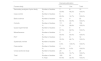
The mean IF of publishing journals was 5.8 (range, 1.2–44.4) (Table 2). Cardiovascular OCs were published in journals with the highest mean IF (11). Overall, 37.1% of DP appeared in first-quartile journals.
Metrics of derived publications by thematic area.
| Thematic Area | No. DP | No. DP with IF/Q | Mean IF (Min–Max) | No. Q1 | No. Q2 | No. Q3 | No. Q4 |
|---|---|---|---|---|---|---|---|
| Cardiovascular | 8 | 5 | 11.0 (1.2–23.4) | 3 | 1 | – | 1 |
| Donation/Transplantation | 1 | 1 | 2.8 (NA) | – | – | 1 | – |
| Ethics | 0 | 0 | – | – | – | – | – |
| Hematology | 1 | 1 | 3.0 (NA) | – | – | 1 | – |
| Infection | 30 | 28 | 5.0 (1.3–27.1) | 9 | 5 | 11 | 3 |
| Metabolism/Nutrition | 3 | 3 | 4.7 (1.7–7.7) | 2 | 1 | – | – |
| Miscellaneous | 0 | 0 | – | – | – | – | – |
| Nephrology | 1 | 0 | – | – | – | – | – |
| Neurointensive Care | 14 | 11 | 4.7 (1.9–19.3) | 2 | 5 | 3 | 1 |
| Organization | 10 | 9 | 5.2 (1.2–27.0) | 2 | 4 | 2 | 1 |
| Respiratory | 13 | 12 | 7.9 (2.3–44.4) | 8 | 1 | 3 | – |
| Sedation/Analgesia | 0 | 0 | – | – | – | – | – |
| Total | 81 | 70 | 5.8 (1.2–44.4) | 26 | 17 | 21 | 6 |
No. DP, number of derived publications; No. DP with IF/Q, derived publications with available journal impact factor (IF) and quartile (Q) for the publication year; No. Q1–Q4, number of publications by the journal’s quartile in the publication year; Mean IF (Min–Max), mean impact factor and minimum–maximum IF (Web of Science/Journal Citation Reports).
Articles were published in 39 different journals (see Supplementary Appendix, “Scientific Journals”). The most frequent was Medicina Intensiva (28.3% of all DP).
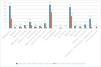
When analyzing the national geographic distribution of OCs and DPs, Catalonia was the autonomous community with the most OCs presented (n=62), followed by Madrid (n=52) and Andalusia (n=50) (Fig. 1).
Of the 81 DPs, 30.9% originated from Catalonia, 23.5% from Madrid and 18.5% from Andalusia.
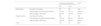
Study design significantly influenced the probability of publication (p=0.015). Randomized clinical trials (RCTs) and quasi-experimental studies were published more often than other study types. Across the five congresses analyzed, 66.7% of RCTs and 62.5% of quasi-experimental studies resulted in publication (Table 3).
Relationship between study design of oral communications and derived publication.
| Derived publication | ||||
|---|---|---|---|---|
| Former study | No | Yes | Total | |
| Secondary analysis of prior study | Number of studies | 7 | 6 | 13 |
| % | 53.8% | 46.2% | 100.0% | |
| Case control | Number of studies | 5 | 1 | 6 |
| % | 83.3% | 16.7% | 100.0% | |
| Basic science | Number of studies | 13 | 9 | 22 |
| % | 59.1% | 40.9% | 100.0% | |
| Cohorts | Number of studies | 111 | 45 | 156 |
| % | 71.2% | 28.8% | 100.0% | |
| Quasi-experimental | Number of studies | 3 | 5 | 8 |
| % | 37.5% | 62.5% | 100.0% | |
| Miscellaneous | Number of studies | 2 | 2 | 4 |
| % | 50.0% | 50.0% | 100.0% | |
| RCT | Number of studies | 4 | 8 | 12 |
| % | 33.3% | 66.7% | 100.0% | |
| Systematic review | Number of studies | 0 | 1 | 1 |
| % | 0.0% | 100.0% | 100.0% | |
| Case series | Number of studies | 4 | 0 | 4 |
| % | 100.0% | 0.0% | 100.0% | |
| Cross-sectional study | Number of studies | 20 | 4 | 24 |
| % | 83.3% | 16.7% | 100.0% | |
| Total | Number of studies | 169 | 81 | 250 |
| % Total | 67.6% | 32.4% | 100.0% | |
DP, derived publication; RCT, randomized clinical trial.
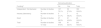
Multicenter studies had a higher publication rate (47.1%) vs single-center studies (22%), with a difference that was statistically significant (p<0.001) (Table 4).
Relationship between single-center vs multicenter studies and probability of publication.
| Derived publication | Total | |||
|---|---|---|---|---|
| No | Yes | |||
| Multicenter | Number of studies | 55 | 49 | 104 |
| Percentage of multicenter studies | 52.9% | 47.1% | 100.0% | |
| Percentage of the total | 22.0% | 19.6% | 41.6% | |
| Single-center | Number of studies | 96 | 27 | 123 |
| Percentage of single-center studies | 78.0% | 22.0% | 100.0% | |
| Percentage of the total | 56.8% | 33.3% | 49.2% | |
| Total | 151 | 76 | 227a | |
Pearson’s chi-square test of independence was performed to assess the relationship between single-center/multicenter status and the probability of publication. The chi-square value was 17.607 (p<0.001).
With respect to association with doctoral thesis, no differences were observed in the probability of resulting in a publication (p=0.652) (Supplementary Appendix, “Association with Doctoral Thesis” table).
Most OCs did not receive funding or did not specify it (n=190). The probability of publication varied according to the type of funding (p=0.016): 58.3% of OCs funded by industry and 43.8% of those supported by grants were published vs 27.9% of those without funding or with undeclared funding (Table 5).
Relationship between type of funding and probability of publication.
| Derived publication | ||||
|---|---|---|---|---|
| Fundinga | No | Yes | Total | |
| Independent / Not declared | Number of studies | 137 | 53 | 190 |
| % | 72.1% | 27.9% | 100.0% | |
| Industry (laboratory) | Number of studies | 5 | 7 | 12 |
| % | 41.7% | 58.3% | 100.0% | |
| Grant | Number of studies | 27 | 21 | 48 |
| % | 56.3% | 43.8% | 100.0% | |
| Total | Number of studies | 169 | 81 | 250 |
| % Total | 67.6% | 32.4% | 100.0% | |
Pearson’s chi-square test of independence was performed to assess the relationship between type of funding and the probability of publication. The chi-square value was 8.269 (p=0.016).
National intensive care congresses are annual events that not only disseminate research but also provide opportunities for networking and collaboration.
The SEMICYUC scientific committee selects approximately 50 OCs per congress, representing the highest-scoring projects, which historically achieve higher publication rates.1
The Scientific Committee of SEMICYUC selects approximately 50 projects to be presented as OCs; the rest are presented as oral posters or electronic posters. OCs attract the most interest from attendees and are considered to have the greatest scientific value, as they are associated with a higher publication rate compared with other formats.1
Publication rate
Our study shows a publication rate of 32.4% among the 250 OCs analyzed. The 2015 congress achieved the highest proportion of publications (36%), while the 2021 congress had the lowest (28%).
These rates are similar to those described in former studies of different disciplines in Spain: 38.3% in cardiology congresses, 26% in pharmacy and anesthesiology congresses, and 17.2% in the shoulder and elbow surgery congress.4,8–10 Internationally, higher rates have been reported: 62.3% at the International Stroke Conference of the American Stroke Association and 45.2% at the European Society for Surgery of the Shoulder and Elbow Congress.3,11
These differences may be explained by the larger number of projects presented at international congresses, which increases competitiveness and the quality of the accepted work. The rigor of the selection process may also play a role, as congresses applying stricter criteria for selecting OCs achieve higher publication rates.
Time to publicationIn line with former studies, most publications occurred within two years of the congress presentation.11
In the study by J. Miquel et al.,4 with a seven-year follow-up, 95.5% of DPs were published within the first four years after presentation.
In our study, the congress with the fewest DPs was held in 2021 (28%). This may be explained by the fact that insufficient time had elapsed to allow for publication of the work. Another hypothesis is that, due to the COVID-19 pandemic throughout 2020 and the associated clinical workload faced by intensivists, many projects were halted and the quality of research may also have been affected.
Distribution by thematic areaThe “Infection” area took the lead both in the number of OCs presented and in DPs. This is likely related to the availability of the ENVIN-HELICS registry, which collects data on device-related infections occurring in ICUs and has enabled many of these studies. Certain areas, such as ethics, nephrology or those classified as miscellaneous, may show lower publication rates due to fewer submissions, lower editorial interest, the difficulty of designing high-level evidence studies or the lack of specialized journals prioritizing these topics in intensive care medicine.
Journals and impact factorThe journal with the most DPs was Medicina Intensiva (28.3%), published by Elsevier Spain. It is the official journal of SEMICYUC and has become the reference journal in Spanish for the specialty. It currently has an IF of 2.7 and is ranked in the 2nd quartile (2023 data).
In our study, the mean IF of journals in which the DPs were published was 5.8 (range, 1.2–44.4). Similar studies have reported lower IFs, such as 1.51 in congresses of the Spanish Society of Shoulder and Elbow Surgery, 1.96 in those of Pharmacology and 2.32 at the European Society for Surgery of the Shoulder and Elbow Congress.3,4,10 However, differences in subject make direct comparison difficult.
Factors associated with publicationWe observed that studies with a higher probability of publication were multicenter, randomized clinical trials and quasi-experimental designs.
Similar results were reported by Schulte et al.,12 in congresses of the German Society of Orthopedics and Trauma Surgery, where randomized and prospective trials were published more frequently than nonrandomized and retrospective ones. Similarly, in the 2018 systematic review by Scherer et al.,1 randomized, prospective, and multicenter trials were published more often than other study types. These findings may be attributed to the fact that such characteristics increase the scientific quality of projects.
We also observed that funded projects had a higher probability of publication, both those sponsored by industry and those supported by grants. This is expected, as funded studies have undergone more rigorous evaluation processes, which may improve quality and increase the likelihood of publication.
Similar findings were described in the 2018 systematic review, in which studies with funding of any type were more frequently published.1
However, it is of note that 76% of the abstracts in our study did not declare or specify funding, limiting inferences about its effect on DPs.
Finally, it is important to consider the fact that the congress selection process prioritizes the highest-quality abstracts for OCs. This does not imply inherent high quality, but rather relative high-quality when compared to the other submissions, which may partly explain the resulting publication rate.
Study limitationsThis study has certain limitations that should be considered.
First, only five congresses from alternate years from 2013 through 2021 were analyzed. We do not know what results would have been obtained had all congresses during this period been included.
Second, the search was not performed in parallel; it was conducted by a single investigator, and DPs may have been underestimated. For future studies, we recommend paired searches to increase accuracy.
Third, although the search was performed on a platform covering many databases, some publications may not have been detected if they were not published in indexed journals or outside the reach of Google Scholar.
With regard to the identification of DPs, the publication title may have changed significantly vs the OC title, making identification difficult. In addition, the first author may differ between the OC and the DP. Translating titles into English may introduce bias, as the search depends on the choice of appropriate terms. All these sources of bias could have been reduced by incorporating a second reviewer or by expanding the search strategy.
As a hypothesis for future research, it would be relevant to analyze factors influencing lower publication rates in certain areas of intensive care and to explore strategies to increase their visibility and publication.
ConclusionsMost abstracts presented as OCs at SEMICYUC congresses are not published. Although only 32.4% of OCs resulted in publication, the resulting articles were published in journals with a mean IF of 5.8, higher than that reported in other medical specialties in Spain. These findings highlight the need to provide intensivist researchers with greater financial resources to improve research quality and increase its impact in the scientific literature.
CRediT authorship contribution statementCinta Millán Gutiérrez: study conception and design; data acquisition, analysis, and interpretation; manuscript drafting; critical revision of intellectual content; approval of the final version for publication.
Maria Gil Arrieta: data analysis and interpretation; critical revision of manuscript intellectual content; methodological contributions; approval of the final version for publication.
Francesc Marcano Fernández: study conception and design; supervision of data analysis; critical revision of the manuscript intellectual content; methodological and statistical contributions; approval of the final version for publication.
María Dolores Bosque Cebolla: critical revision of the manuscript intellectual content; methodological contributions; approval of the final version for publication.
Juan Miguel Goyeneche Cepeda: critical revision of the manuscript intellectual content; methodological contributions; approval of the final version for publication.
María Luisa Martínez González: critical revision of the manuscript intellectual content; methodological contributions; approval of the final version for publication.
Declaration of Generative AI and AI-assisted technologies in the writing processNo artificial intelligence tools were used in the conduct or writing of this study.
FundingNone declared.
None declared.
We thank SEMICYUC for providing all the requested information. We extend special thanks to Dr. Ignasi Bolibar for supervising this study as part of a master’s final project.