
To evaluate the association between weaning time from invasive mechanical ventilation (IMV) and occurrence of physical and mental health disabilities in ICU survivors.
DesignProspective, multicenter cohort study.
Setting10 Brazilian ICUs (May 2014-December 2018).
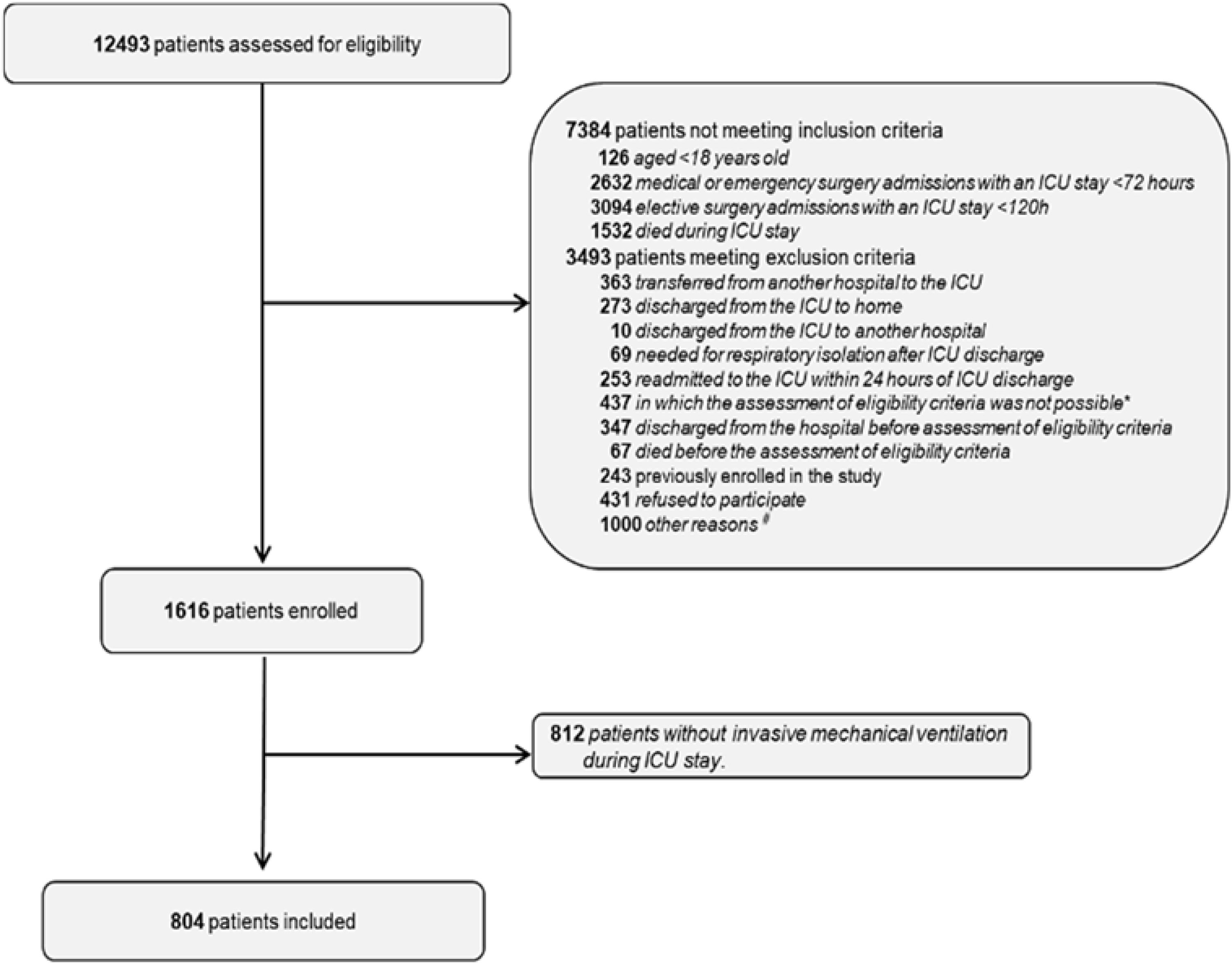
Patients or ParticipantsAdult survivors with an ICU stay >72 h for emergency medical and surgical admissions or >120 h for elective surgical admissions and who used IMV. Classification into 3 groups: simple, difficult, and prolonged weaning.
InterventionsFollow-up through structured telephone interviews
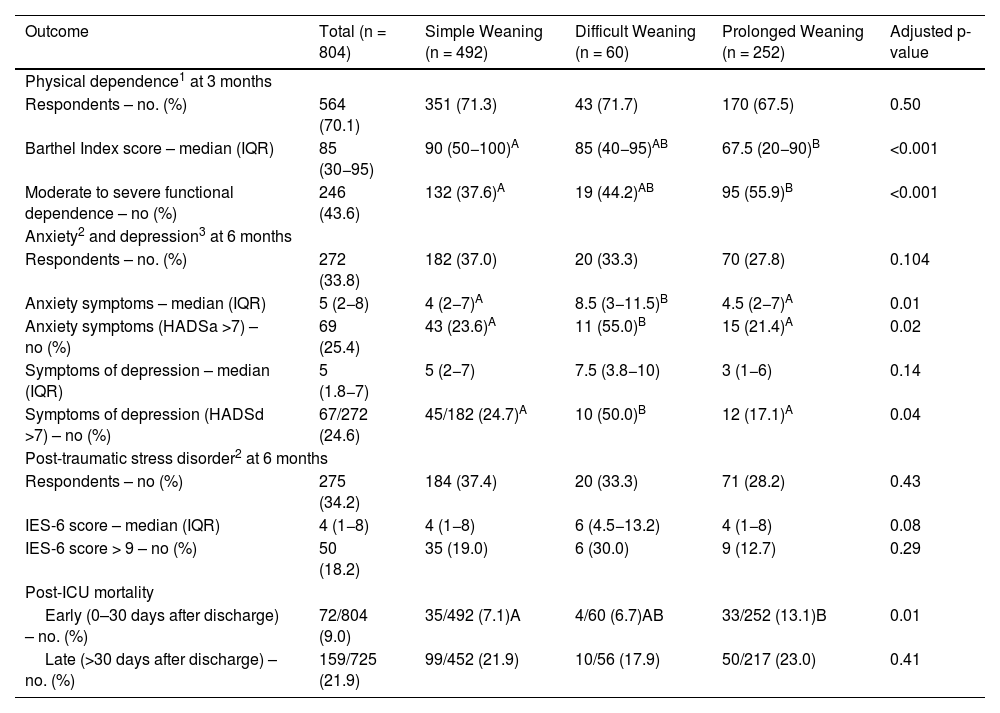
Main variables of interestOutcomes included moderate to severe functional physical dependence (Barthel Index score ≤75) at 3 months post-ICU discharge, symptoms of anxiety and depression (Hospital Anxiety and Depression Symptom Scale scores >7 in the anxiety or depression subdomains) and post-traumatic stress (Impact Event Scale-6 > 9) at 6 months post-ICU discharge and all-cause post-ICU mortality (categorized as early [0–30 days] and late [>30 days]).
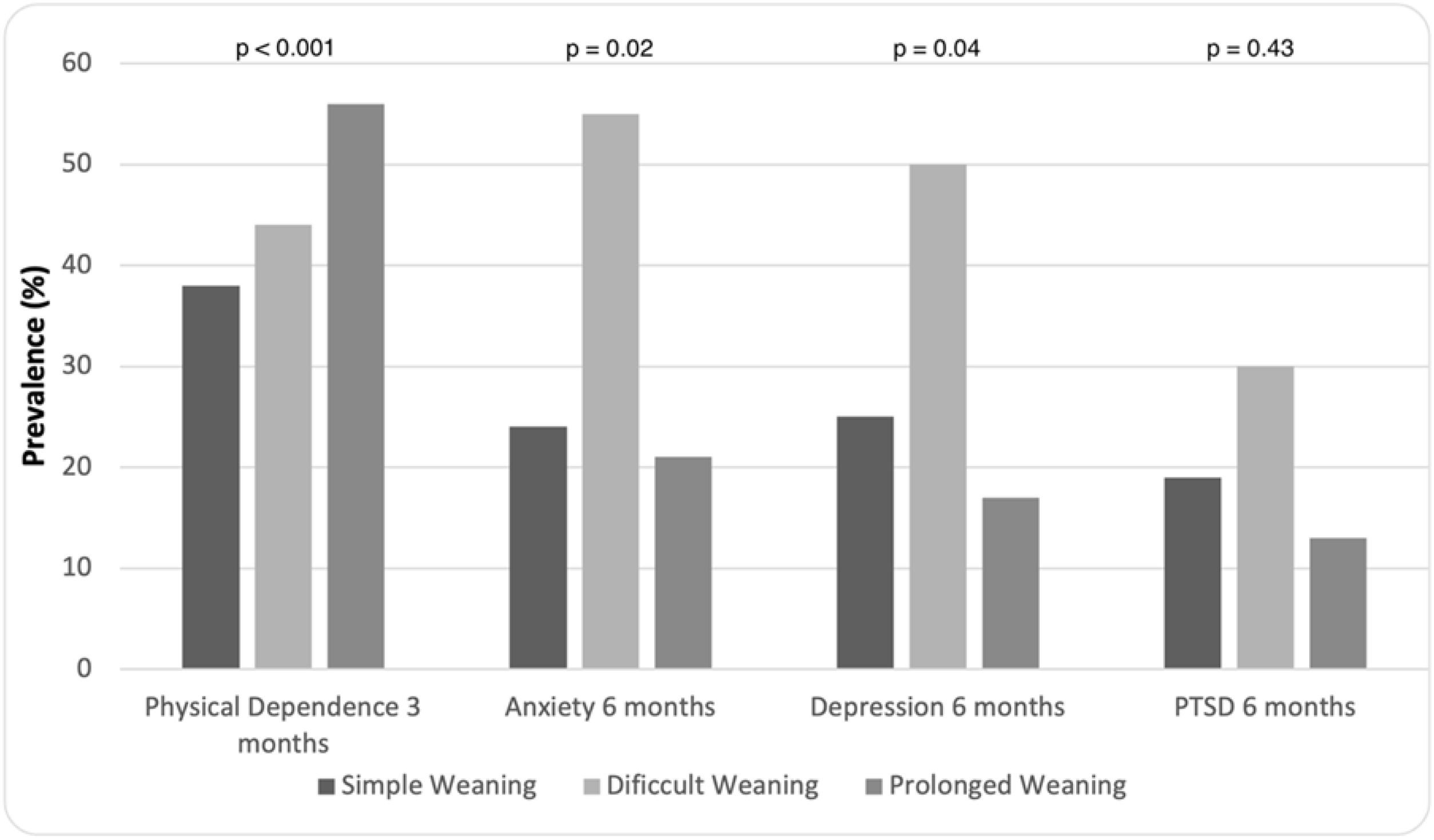
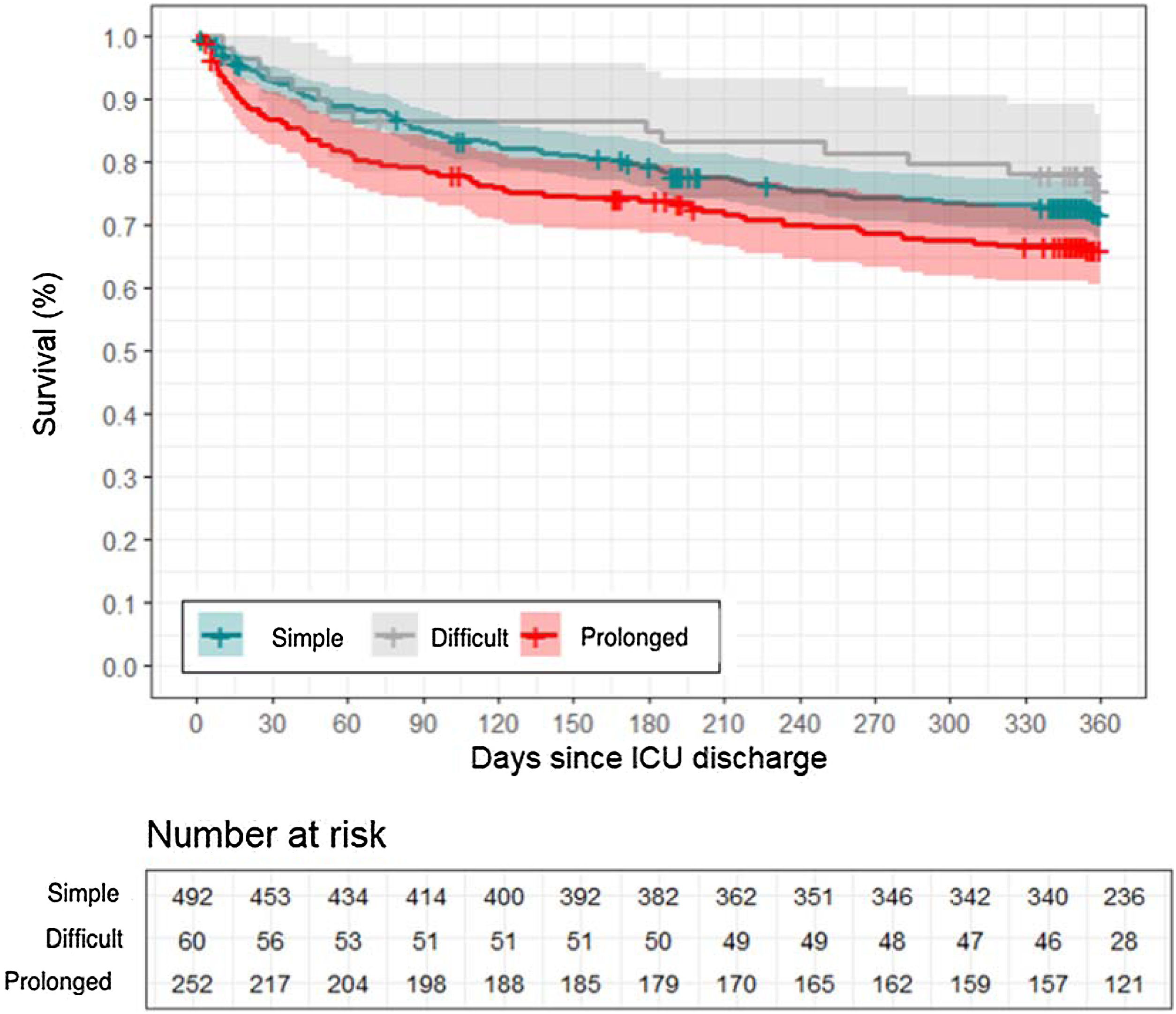
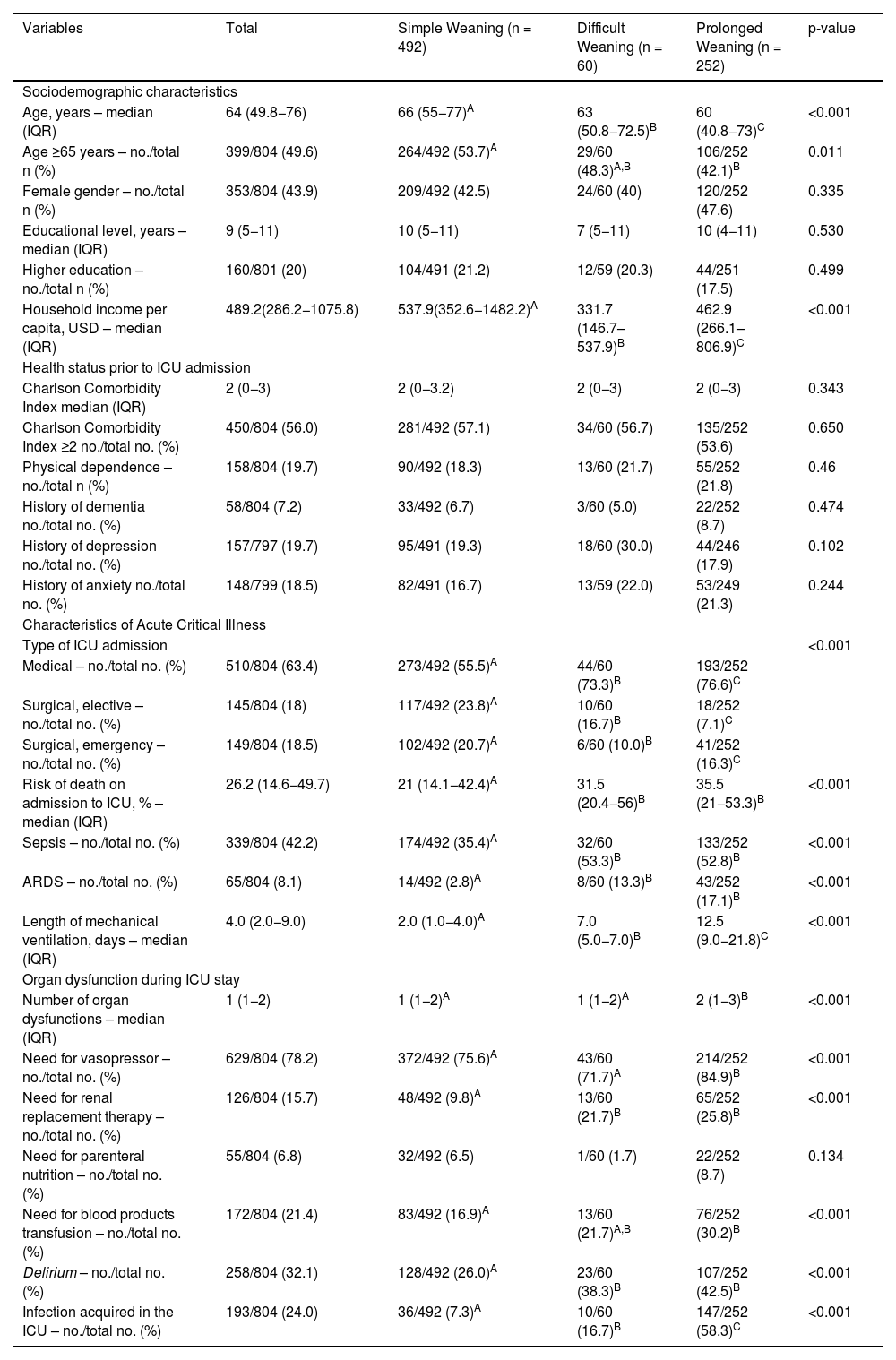
ResultsOf the 804 patients, 492 (61.2%) presented simple weaning, 60 (7.5%) difficult weaning and 252 (31.3%) prolonged weaning. In total, 670 (83.3%) and 630 (78.3%) patients were alive at 3 and 6 months. Early post-ICU mortality (13.1% vs. 7.1%; p = 0.01) and 3-month physical dependence (55.9% vs. 37.6%; p < 0.001) were both higher in the prolonged weaning group than in the simple weaning group. At 6 months, difficult weaning patients were more anxious (55% vs 23.6% vs 21.4%; p = 0.02) and depressed (50% vs 24.7% vs 17.1%; p = 0.04) compared to simple and prolonged weaning groups, respectively, with no differences regarding post-traumatic stress.
ConclusionICU survivors who experienced prolonged weaning had higher early post-ICU mortality and greater rates of moderate to severe physical functional dependence at three months after discharge, whereas those with difficult weaning showed higher rates of anxiety and depression at six months.
Evaluar la asociación entre tiempo de destete de la ventilación mecánica invasiva (VMI) y aparición de discapacidades físicas y mentales en supervivientes a la UCI.
DiseñoEstudio de cohorte, prospectivo, multicéntrico.
Ámbito10 UCI brasileñas (mayo 2014-diciembre 2018).
PacientesAdultos supervivientes, estancia >72 horas por ingresos médicos/quirúrgicos urgentes o >120 horas tras cirurgia electiva, que requirieron VMI. Tres grupos: destete simple, difícil o prolongado.
IntervencionesSeguimiento mediante entrevistas telefónicas estructuradas
Variables de interés principalesDependencia física funcional moderada a grave (Índice de Barthel ≤75) en 3 meses del alta de la UCI, síntomas de ansiedad y depresión (puntuaciones >7 en la Escala de Síntomas de Ansiedad y Depresión Hospitalaria-subdominios de ansiedad o depresión) y estrés postraumático (Escala de Impacto de Evento-6 > 9) a los 6 meses tras alta de la UCI y mortalidad post-UCI por todas las causas (clasificada como temprana [0 a 30 días] y tardía [>30 días]).
ResultadosEntre 804 pacientes, 492 (61.2%) presentaron destete simple, 60 (7.5%) destete difícil y 252 (31.3%) destete prolongado. Sobrevivieron 670 (83.3%) en 3 meses y 630 (78.3%) en 6 meses. La mortalidad temprana posterior a la UCI (13.1% vs. 7.1%; p = 0.01) y la dependencia física a los 3 meses (55.9% vs. 37.6%; p < 0.001) fueron mayores en el grupo con destete prolongado que en el grupo con destete simple. En 6 meses, pacientes con destete difícil presentaron más ansiedad (55% vs. 23.6% vs. 21.4%; p = 0.02) y depresión (50% vs. 24.7% vs. 17.1%; p = 0.04) en comparación con los grupos de destete simple y prolongado, respectivamente, sin diferencias em cuanto a estrés postraumático.
ConclusionesSupervivientes de la UCI con destete prolongado han presentado mayor mortalidad temprana y major dependencia funcional física moderada/severa a los tres meses, mientras que aquellos con destete difícil apresentam más sintomas de ansiedad y depresión a los 6 meses tras alta de la UCI.
Article
Go to the members area of the website of the SEMICYUC (www.semicyuc.org )and click the link to the magazine.