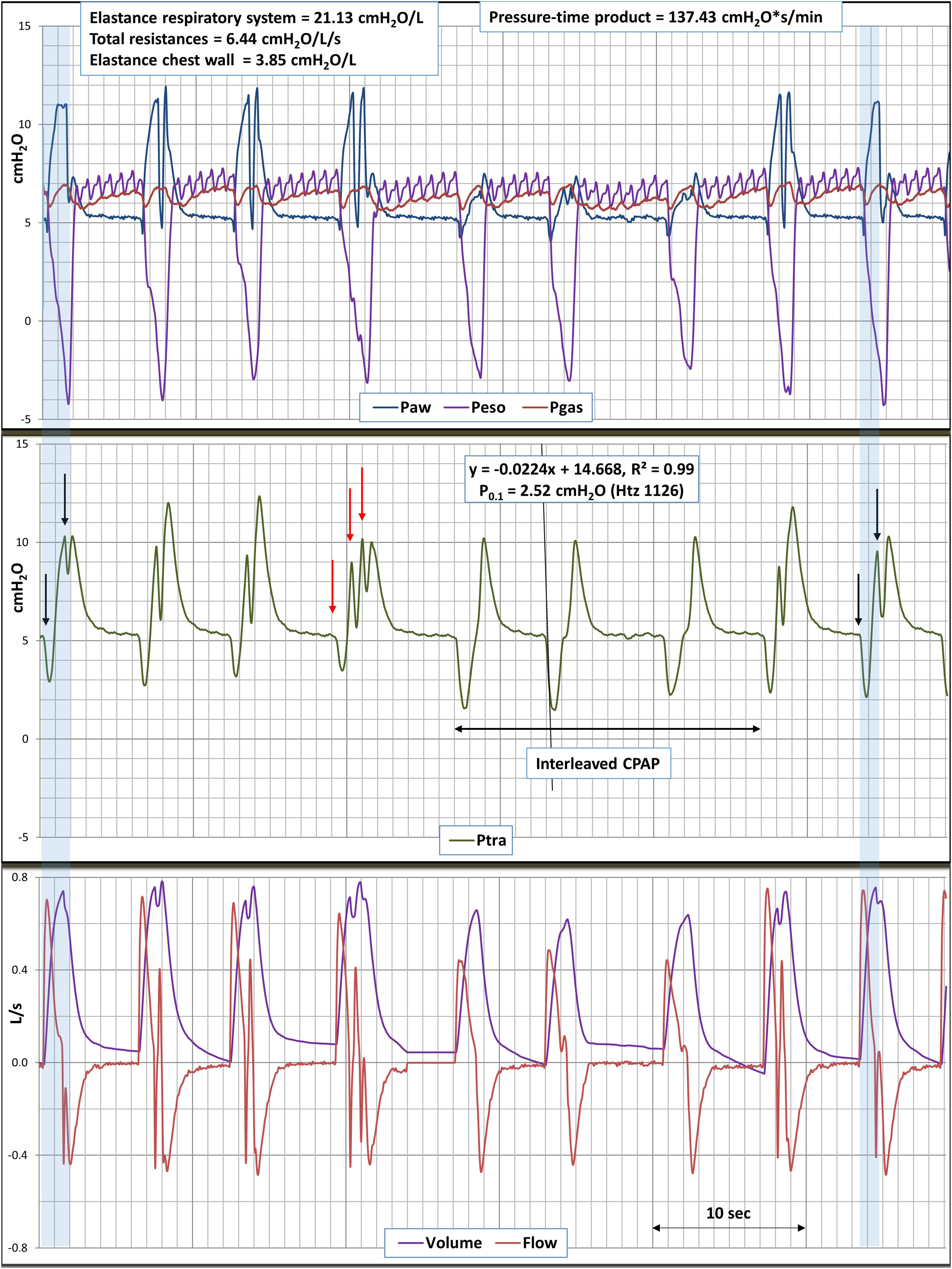
A 60-year-old patient with no relevant medical history was intubated because of community-associated pneumoniae respiratory failure. A double-cycling asynchrony was observed clinically after patient-initiated effort during pressure support ventilation (RASS -2, -3). Airway pressure (Paw), flow, esophageal, and gastric pressure signals (Peso, Pgas) were monitored. A specific tracheal pressure (Ptra) catheter was inserted (REF M1045564, CareFusion, Finland). This asynchrony was more accurately identified by Ptra than Peso or Paw (black arrows, blue area on the figure’s first and last cycles). Ptra signal allowed the identification of a triple trigger (red arrows), confirmed with the flow signal. Interleaved CPAP showed cancellation of the asynchrony, similar to a reverse triggering, and provided information on the influence of the pleural pressure on Ptraq. The Fig. 1 shows the data of mechanical load.
CRediT authorship contribution statement
MVM collected and analyzed the patient data, revised and wrote the manuscript. LPA analyzed the patient data and revised the manuscript. JMSS designed the study, interpreted all data and wrote the manuscript.
FundingNo funding has been obtained for this work.
We declare that we have no conflict of interest.
None.