
At the end of 2019, SARS-CoV-2 emerged as a new cause of viral pneumonia. Between 9% and 13% of patients with hypoxemic respiratory failure were admitted to intensive care units (ICUs) and required invasive mechanical ventilation (MV).1 The sequelae of SARS-CoV-2 included long-term cardiovascular, respiratory, musculoskeletal, and neurological complications, with a significant impact on health-related quality of life (HRQoL).2 Most studies have focused on outpatients and hospitalized patients, while very few have evaluated the evolution of HRQoL and the impact of continued MV in patients admitted to weaning and mechanical ventilation rehabilitation centers (W-MVRC) post-ICU.3–6 Therefore, the aim of this study was to describe HRQoL evolution during the year after home discharge and to analyze the differences between patients who were admitted with spontaneous ventilation and those who required MV.
We conducted a retrospective cohort study including patients older than 18 years with confirmed SARS-CoV-2 viral pneumonia diagnosed by PCR (from May 2020 through December 2023). Patients were excluded if their baseline HRQoL status could not be recorded 1 month prior to ICU admission, if they could not be contacted during follow-up, or if they declined to participate in the telephone interview. HRQoL was assessed using the EQ-5D-5L questionnaire, administered at 5 time points: before ICU admission (month prior to ICU hospitalization), and 1, 3, 6, and 12 months after discharge from the W-MVRC. Numerical variables were expressed as mean and standard deviation (SD) or as median and interquartile range (IQR, 25–75), depending on the data distribution (Shapiro-Wilk). Categorical variables were expressed as absolute frequencies (n) and relative frequencies (%). To compare clinical-demographic variables, statistical tests were applied based on data distribution. The dimensions of the EQ-5D-5 L questionnaire were categorized into 2 groups: (a) normal/mild problems, and (b) moderate or severe (severe/extreme) problems. Generalized linear mixed models (GLMM) were used to analyze the effect of the variables of interest. All statistical analyses were performed with R software (version 4.3.2). The study was approved by the Research Ethics Committee of the Argentine Society of Intensive Care (ID: 14419).
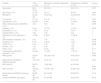
During the study period, 104 post-COVID-19 patients from various ICUs were admitted. Seventy-two of these (70%) were discharged home and 50 (69%) met the inclusion criteria. The clinical-epidemiological variables are presented in Table 1.
Clinical and demographic characteristics of patients according to mechanical ventilation dependence at admission to the rehabilitation center.
| Variable | Total (n = 50) | Mechanical ventilation dependent (n = 17) | Spontaneous ventilation (n = 33) | p-value |
|---|---|---|---|---|
| Age (years) | 60.8 (13.2) | 63 (13.5) | 59.5 (13.1) | 0.377 |
| Sex (male), n (%) | 37 (74) | 12 (71) | 25 (76) | 0.957 |
| BMI (kg/m2) | 25 (23–30) | 24 (23–32) | 25.5 (23–29) | 0.941 |
| CCI (points) | 2 (1–3) | 3 (1–4) | 2 (1–3) | 0.321 |
| Hypertension, n (%) | 24 (48) | 9 (53) | 15 (45.5) | 0.839 |
| Other cardiovascular comorbidities, n (%) | 3 (6) | 0 (0) | 3 (9) | 0.978 |
| Diabetes, n (%) | 8 (16) | 3 (17.6) | 5 (15.2) | 0.694 |
| Dyslipidemia, n (%) | 7 (14) | 2 (12) | 5 (15) | 1 |
| Hypothyroidism, n (%) | 3 (6) | 1 (6) | 2 (5) | 1 |
| Obesity prior to ICU admission, n (%) | 18 (36) | 6 (35.6) | 12 (36.4) | 1 |
| Other metabolic diseases, n (%) | 2 (4) | 1 (6) | 1 (3) | 0.998 |
| Smoking, n (%) | 8 (16) | 4 (23.5) | 4 (12) | 0.419 |
| COPD, n (%) | 2 (4) | 1 (6) | 1 (3) | 0.999 |
| Asthma, n (%) | 1 (2) | 0 (0) | 1 (3) | 1 |
| Stroke, n (%) | 2 (4) | 2 (12) | 0 (0) | 0.111 |
| Tracheostomy at W-MVRC admission, n (%) | 34 (68) | 17 (100) | 17 (51.5) | < 0.001 |
| MRC (points) | 45 (36–52) | 40.5 (26.5–53) | 44.5 (43–51) | 0.682 |
| Barthel Index at W-MVRC admission (points) | 15 (5–45) | 2.5 (0–15) | 30 (10–50) | 0.012 |
| MIP (cmH₂O)ᵇ | 80 (70–90) | 70 (60–80) | 90 (79–96) | < 0.001 |
| MEP (cmH₂O)ᵇ | 100 (90–120) | 100 (90–125) | 90 (90–100) | 0.261 |
| Barthel Index at W-MVRC discharge (points) | 90 (80–95) | 85 (79–90) | 95 (85–95) | 0.119 |
| Length of W-MVRC stay (days) | 45.5 (33–76) | 61 (40–90) | 43 (27–54) | 0.012 |
Data are expressed as median (IQR 25–75), mean (SD).
ICU: Intensive Care Unit; W-MVRC: weaning and mechanical ventilation rehabilitation center; BMI: Body Mass Index; CCI: Charlson Comorbidity Index; COPD: Chronic Obstructive Pulmonary Disease; MRC: Medical Research Council; MIP: Maximal Inspiratory Pressure; MEP: Maximal Expiratory Pressure.
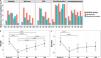
Moderate or severe problems reported by patients were more frequent in the domains of pain/discomfort and anxiety/depression (Fig. 1A). In the pain domain, in some cases, values exceeded 40% in both ventilation groups (with or without MV at admission). Regarding the anxiety/depression domain, the MV-dependent group reported moderate or severe problems in 25% of cases, with a higher trend over the analyzed period compared to the spontaneous ventilation group.
Panel A shows the percentage of patients with moderate or severe problems in the EQ-5D-5 L domains during follow-up, according to MV requirement at admission to our W-MVRC. The evolution of perceived quality of life (EQ VAS) and the quality-of-life index (EQ index) from pre-ICU to 1-year follow-up are shown in panels B and C, respectively. Points represent the mean, and whiskers represent the 95%CI.
ADL: activities of daily living; W-MVRC: weaning and mechanical ventilation rehabilitation center; M: month of follow-up; ICU: Intensive Care Unit; MV: mechanical ventilation.
The results of perceived quality of life (EQ VAS) indicated that the interaction between time and ventilatory status at admission was not significant (F = 1.92; df = 4; p = 0.108), suggesting that changes in EQ VAS over time did not differ significantly between ventilation groups. However, the effect of time was statistically significant (F = 13.17; df = 4; p < 0.001) (Fig. 1B). Regarding the quality-of-life utility index (EQ index), no significant interaction between time and ventilatory condition was identified (F = 0.56; df = 4; p = 0.690). Nevertheless, time showed a statistically significant effect (F = 4.63; df = 4; p = 0.001) (Fig. 1C).
Results showed a significant decline in EQ VAS within the first month after discharge from the W-MVRC vs pre-ICU values. This negative impact persisted up to 6 months, with a trend toward normalization at 12 months, when no significant differences were observed vs baseline values. The EQ index showed a decline at months 1 and 3, with no significant differences at 6 and 12 months vs baseline values, which suggests progressive recovery, with greater vulnerability in the early months post-discharge.
Regarding the domains assessed with the EQ-5D-5 L, pain/discomfort and anxiety/depression were the most affected, especially in patients admitted with MV dependency. While former studies have reported a persistent impact on pain/discomfort and anxiety/depression, our results indicate a higher impact (up to 30%).7–10 A possible explanation is the selection of a subgroup of patients who remained on MV and required rehabilitation after ICU discharge, reflecting the severity of these cases.
Our study showed that the greatest impact on HRQoL occurred within the first month after discharge, with progressive improvement toward 1 year. In contrast, a German study reported that HRQoL peaked at discharge and then declined⁷. Of note, patients in the German study had longer ICU stays, spent more days on MV, and had longer rehabilitation period vs our study.
Our results suggest that a differentiated rehabilitation approach based on ventilatory dependency may not be essential. However, pain management and psychological support should be prioritized due to their impact on HRQoL recovery. Future studies should evaluate specific interventions targeting these domains to optimize functional recovery and long-term quality of life.
CRediT authorship contribution statementESR: conceptualization, methodology, research, formal analysis, writing — original draft, writing — review and editing. EN: conceptualization, methodology, research, formal analysis, writing — original draft, writing — review and editing, supervision. MLDV: methodology, research, writing — original draft. AG: research, formal analysis, writing — original draft. MAE: writing — original draft, writing — review and editing. JC: research, formal analysis. MDC: writing — original draft, writing — review and editing. GGMV: conceptualization, methodology, writing — original draft. ELDV: conceptualization, methodology, writing — original draft, writing — review and editing, supervision.
All authors approved the final version of the article.
Declaration of Generative AI and AI-assisted technologies in the writing processNo generative artificial intelligence was used for this publication.
FundingNone declared.
None declared.