
Suggestions
Idioma
Guide for authors
Searcher
Journal Information
Vol. 49. Issue 11.
(November 2025)
Images in Intensive Medicine
Full text access

Septic shock secondary to Capnocytophaga canimorsus bite acquired without celulitis

Shock séptico por Capnocytophaga canimorsus por mordedura sin celulitis
Visits
585
Hugo Arrando Barberaa,
Corresponding author
hugoarrando@gmail.com

Corresponding author.
, Ángel Orera Pérezb, Juan Díaz Nohalesb
a Servicio de Medicina Intensiva, Hospital Universitario y Politénico La Fe. Valencia, Spain
b Servicio de Anatomía Patológica, Hospital Universitario y Politécnico la Fe. Valencia, Spain
This item has received
Article information
Full Text
Download PDF
Statistics
Figures (3)
fig0005
fig0010
fig0015
Full Text

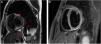
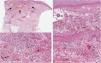
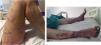
A woman presented with distributive shock, severe septic cardiomyopathy, and encephalopathy. She had sustained a dog bite several days prior. Capnocytophaga canimorsus was isolated from blood cultures. Coronary computed tomography angiography of the lower limbs revealed the presence of vascular involvement. Cardiac magnetic resonance imaging showed ventricular dilation and functional loss, with subepicardial edema (Fig. 1A, SAX T2MAp BH sequence, red arrow) and late gadolinium enhancement (Fig. 1B, SAX TIR BH sequence, blue arrow), consistent with myocarditis. A biopsy of the dermal lesions was performed (Fig. 2, hemorrhagic extravasation [black arrow]; leukocytoclastic vasculitis infiltration [yellow arrow]; and fibrinoid necrosis [white arrow]). The initial lesions are shown (Fig. 3A, purpura fulminans type) and weeks later, prior to distal amputation (Fig. 3B, established necrotic lesions, yellow arrow).

Figure 1
Figure 2
Figure 3
Funding

None declared.

Declaration of competing interest

None declared.

Copyright © 2025. Elsevier España, S.L.U. and SEMICYUC
Download PDF
Idiomas
Medicina Intensiva (English Edition)
Article options
Tools