
Enteral nutrition (EN) bezoars result from the solidification of EN formulas, potentially causing gastrointestinal (GI) obstruction.1 Although rare, 0.9% ICU incidence,2 they can be life-threatening due to GI bleeding, obstruction, or perforation. Currently, no standardized treatment exists.
We report a case of an esophageal EN bezoar successfully treated in our ICU.
A 75-year-old male with no relevant medical history was admitted to the ICU for respiratory failure secondary to SARS-CoV-2, complicated by bilateral pulmonary thromboembolism (SOFA 6). On day 3, orotracheal intubation for mechanical ventilation (MV) and deep sedation (propofol 2.4 mg/kg/h plus midazolam 0.15 mg/kg/h) were required. Persistent hypoxemia necessitated neuromuscular blockade with cisatracurium, inhaled nitric oxide, and five prone sessions. Given his critical condition, parenteral nutrition was administered on days 2−5. Clinical evolution was slow by emphysematous lung and organizing pneumonia, for which methylprednisolone was started.
The ICU course was marked by several infectious events: on day 36, ventilator-associated pneumonia (VAP) by Burkholderia gladioli, herpes simplex virus type 1, and cytomegalovirus; on day 46 and 49, catheter-related Staphylococcus epidermidis bacteremia and VAP due to Serratia marcescens, respectively.
The patient underwent a prolonged weaning related to opioid withdrawal, after transdermal fentanyl (25mcg/h) as part of the analgesic regimen. Methadone was started 5 mg IV plus 30 mg through nasogastric tube (NGT) daily. He developed confusion managed with IV haloperidol (5 mg/8 h), an erythematous skin rash treated with dexclorpheniramine, and severe critical-illness myopathy.
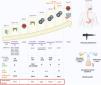
EN began on day 11 with a high-protein, fiber-free, concentrated formula (1.6 g casein/100 mL) 1,500 mL/day plus a casein-based protein powder module (PPM) (24 g casein/day). Later, the formula was shifted to a high-protein, concentrated, fiber-containing one (1.6 g casein/100 mL) 1,000 mL/day plus PPM (24 g casein/day). After 17 days, the initial fiber-free formula (1.6 g casein/100 mL) was resumed 1,440 mL/day plus PPM (11 g casein/day). On day 63, the diet was shifted to a high-protein, fiber-free standard formula (6.26 g casein/100 mL) 1,500 mL/day, reaching 105.3 g casein/day including PPM. Six days later, due to hypertriglyceridemia, diet was switched to an oligomeric formula (no casein) 1,000 mL/day plus PPM (24 g casein/day). The nutritional course is detailed in Fig. 1.
Timeline of enteral nutrition support, esophageal bezoar development and bezoar therapy.
Footnote Figure: *Doses calculated based on the highest rate received.
EN: enteral nutrition; MF: multifiber; PPM: protein powder module; WF: without fiber.
Created in BioRender. De antonio cusco, M. (2025) https:// BioRender.com/r1ic59m
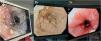
On day 69, after 58 days on EN, NGT passage was obstructed and displaced at the esophageal level. Emergency upper GI endoscopy revealed an extensive EN bezoar impacted from the cervical third of the esophagus, which was successfully disimpacted by endoscopic water fragmentation (Fig. 2). The esophageal mucosa appeared friable and bleeding. A new NGT was placed, and a continuous high-dose omeprazole IV infusion was initiated for three days.
To dissolve residual bezoar material, enzyme-bicarbonate therapy was administered for three days. A 20 mL solution was prepared by mixing 10 mL of 1 M sodium bicarbonate with 10 mL sterile lukewarm water, then combining with pancreatic enzymes (20,000U lipase).3,4 Bicarbonate provided an alkaline medium for enzymatic activation, which is short-lived, requiring immediate administration. This solution was administered via NGT every 8 h, with 10-minute clamping, keeping the tube in decline and EN paused. After completion, EN was resumed without repeat endoscopy.
On day 99, the patient was transferred to a conventional ward and discharged to a long-term care center after 217 days.
EN is the preferred nutritional route in critically-ill patients with functional GI tracts. Although GI dysmotility is reported in up to 50–80 % of critically-ill patients, esophageal disorders are underestimated. The pathophysiology of esophageal EN bezoars is unclear, but gastroesophageal reflux (GER) is a key contributor, exacerbated by supine positioning and prolonged NGT use, especially in MV. These conditions impair lower esophageal sphincter tone and promote esophageal irritation.5
Critically-ill patients frequently present multiple predisposing factors for EN bezoar, including illness severity, GI hypomotility, prolonged NGT use, certain medications (e.g., sucralfate, aluminum antacids, anticholinergic drugs), EN duration and composition (high-casein, insoluble fiber).
In our case, several risk factors were present:
- -
Illness severity (SOFA score: 6) and extended ICU stay may disrupt gut-brain axis and autonomic regulation, causing GI hypomotility and EN stasis. Inflammation may alter gut microbiota and enteric nervous system function. Splanchnic hypoperfusion and proton pump inhibitors may reduce gastric acid and pancreatic secretions, delaying gastric emptying and promoting bezoar.
- -
Myopathy, immobilization and neuromuscular blockade, all decreasing GI motility and delaying gastric transit.
- -
Deep sedation, impaired motility and promoted reflux.
- -
Extended MV (66 days until bezoar detection) and supine position, which impair esophageal dysmotility function and favor reflux.
- -
Long-term EN (58 days) and NGT use, increasing exposure time for accumulation and EN coagulation.
- -
High casein intake, from EN formulas and PPM (up to 105 g/day). Casein-based formulas solidify within five minutes at pH<5.6 In contrast, peptide-based formulas remain soluble at pH < 1, suggesting safer profile in acid-related conditions.6
- -
Fiber-containing formulas. Insoluble fiber is strongly implicated due to its indigestibility and tendency to aggregate, but soluble fiber may also contribute by increasing luminal viscosity slowing gastric emptying.7 However, in our patient, no fiber-containing formula had been administered during the 24 days preceding bezoar diagnosis.
- -
Opioid exposure, including transdermal fentanyl and methadone. Opioid-induced esophageal dysfunction has been described, with up to 3% incidence at 3 months, possibly linked to nitric oxide modulation.8
- -
Anticholinergic drugs, such as haloperidol and dexchlorpheniramine, which reduce peristaltic wave amplitude and impair bolus transit and sphincter function.9
Endoscopic fragmentation is the standard treatment for EN bezoars,5 but carries risk in bleeding or fragile mucosa. Pharmacologic options include lytic enzymes (e.g. papain, cellulase, pancreatic enzymes, N-acetylcysteine) or effervescent agents to soften the mass (e.g., cola beverages or sodium bicarbonate).5 Cola beverages were ruled out due to their acidity, which may exacerbate casein coagulation. Enzyme-bicarbonate therapy was selected as a safer and effective dissolution strategy.
To our knowledge, only one case has reported successful use of intraesophageal instillation of pancreatic enzymes with bicarbonate10 and three using bicarbonate alone.4 Our case supports the proposal of the combined approach as a viable alternative strategy for managing esophageal EN bezoars.
In conclusion, this case illustrates the lack of standardized treatment for esophageal EN bezoars and highlights the importance of recognizing risk factors, particularly those related to EN composition. Combined endoscopic and enzymatic therapy may represent an alternative treatment option. Further research is needed to guide prevention and management.
CRediT authorship contribution statementConceptualization: Marta de Antonio-Cuscó, Lucía Picazo, Mónica Marín-Casino, Javier Mateu-de Antonio.
Methodology: Marta de Antonio-Cuscó, Lucía Picazo, Agustí Albalat-Torres, Mónica Marín-Casino, Javier Mateu-de Antonio.
Data curation: Marta de Antonio-Cuscó, Lucía Picazo, Francisco José Parrilla-Gómez.
Investigation: all authors.
Writing-original draft: all authors.
Writing review and editing: all authors.
Supervision: Javier Mateu-de Antonio.
Declaration of Generative AI and AI-assisted technologies in the writing processNone to declare.
In preparing this work, the authors used ChatGPT for check grammar and spelling. After using this, the authors reviewed and edited the text and assume full responsibility for the content of the publication.
FundingThis study was supported by internal funding.
None to declare.